
Is the Evil Eye Good or Bad? Meaning & Beliefs Explained
Distinguishing the Malevolent Curse from the Protective Amulet: A Comprehensive Guide to Cultural Origins, Modern Symbolism, and Cross-Border Interpersonal Etiquette

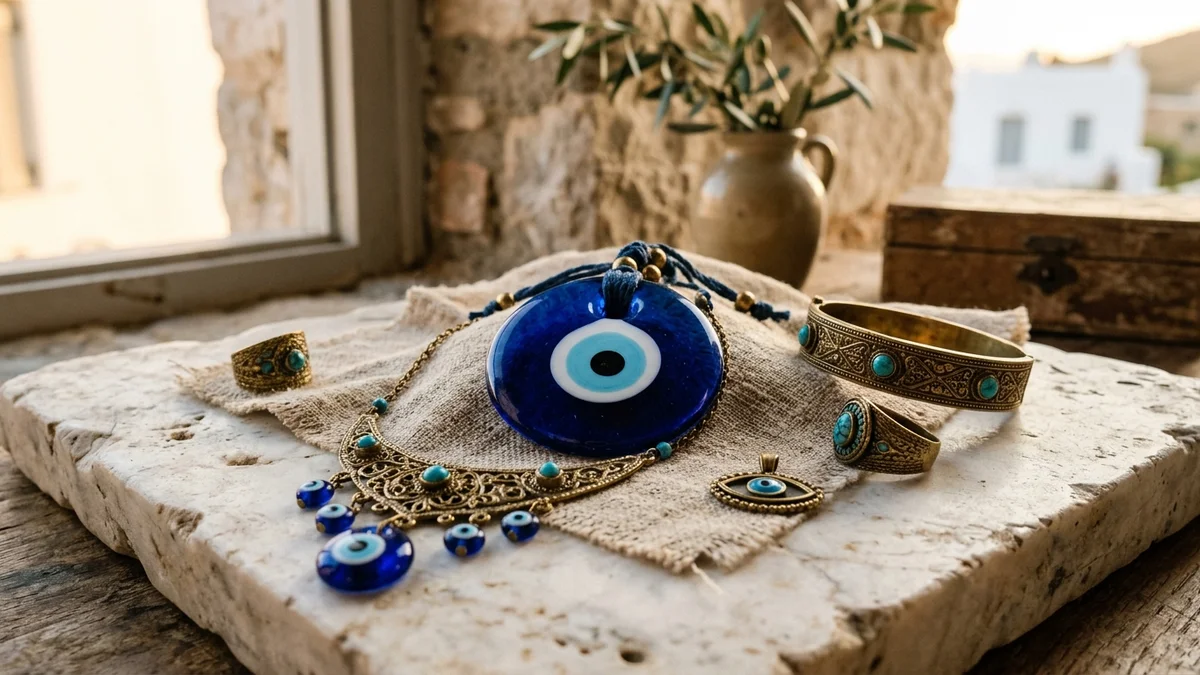
- The "evil eye" itself is strictly negative: it refers to a quasi-magical curse or negative spiritual energy transmitted via an envious, covetous, or hostile glare.
- Conversely, the popular blue glass eye symbol seen on jewelry, home decor, and souvenirs is positive: it is a talisman (the Nazar or mati) designed to deflect the curse.
- Belief in the evil eye dates back over 5,000 years to ancient Mesopotamia and Classical Greece, cited by philosophers including Plato, Plutarch, and Hesiod.
- In multinational business and professional diplomacy, wearing or displaying the talisman requires cultural literacy: in Mediterranean and Middle Eastern contexts it signals protection and modesty, whereas in conservative Western corporate circles it is often viewed as personal adornment.
- Modern conversational etiquette suggests being mindful of excessive flattery or envy: in many cultures, praising someone’s achievements without offering a blessing or humble counter-phrase is believed to invite negative fortune.
Quick Answer: Is the Evil Eye Good or Bad?
The short answer depends entirely on whether you are referring to the curse or the amulet.
The evil eye itself is unequivocally bad. Across virtually every culture that recognizes it, the evil eye is defined as a curse, misfortune, or psychic affliction brought upon a person by the envious, covetous, or resentful glare of another human being.
However, the blue eye charm (known as the Nazar, mati, or nazar boncuğu) that millions of people wear as bracelets, pendants, or car ornaments is good. It is an apotropaic charm—a protective talisman designed to absorb, reflect, and neutralize the malicious energy directed at the wearer.
Confusion arises because people commonly refer to both the malevolent gaze and the protective blue amulet by the exact same shorthand phrase: "the evil eye." In reality, the talisman is an anti-evil eye shield.
When someone asks, "Is the evil eye good or bad to wear?", the proper response is reassuring: wearing the charm is intended to bring protection, positive fortune, emotional peace of mind, and psychic shielding. In modern enterprise environments, managing envy and passive-aggressive interpersonal dynamics requires clear boundaries, as detailed in our guide to how to stand up for yourself with assertive communication.
The Lexicon of Protection: Nazar, Mati, and Hamsa
To navigate global conversations and business etiquette with precision, one must distinguish between the distinct symbols and historical terms used across regions.
When sudden organizational misfortune strikes, historical folklore attributed catastrophic downward spirals to the evil gaze—a fear that parallels modern metaphors examined in going to hell in a handbasket and crisis leadership.
1. The Nazar Boncuğu (Turkish & Ottoman Tradition)
The iconic blue glass disk featuring concentric circles of dark blue, white, light blue, and black is called a Nazar (derived from the Arabic word for "sight" or "vision"). Handcrafted by glassmakers in Anatolia for centuries, tradition holds that if the glass cracks or shatters, it has successfully absorbed a blast of malevolent envy and must be replaced immediately.
In Turkish business offices, it is standard practice to hang a Nazar near the main doorway or reception desk to greet incoming visitors, ensuring that envy does not compromise business prosperity.
2. The Mati (Greek Tradition)
In Greek and Cypriot culture, the phenomenon is referred to as to matiasma (casting the eye) or simply to mati (the eye). Mothers often pin tiny blue beads to newborn infants' clothing to safeguard them from covetous compliments.
In Greek business gatherings, when a peer achieves an exceptional financial milestone, colleagues often make a gentle spitting sound ("ftou, ftou, ftou") to dispel any subconscious envy.
3. The Hamsa / Hand of Fatima / Hand of Miriam
Across the Middle East and North Africa, the open palm symbol known as the Hamsa frequently incorporates an eye at its center. In Jewish and Islamic traditions, the Hamsa represents divine protection, blessing, and defense against malicious intent.
While the Hamsa incorporates the eye, it represents an active blessing of strength and hospitality rather than a passive reflective mirror alone.
Understanding these distinctions prevents awkward faux pas in cross-cultural trade negotiations and international hospitality.
Color Meanings: What Different Evil Eye Amulets Signify
While the deep cobalt blue talisman remains the classical global standard, modern artisans and jewelry designers offer charms in various hues, each associated with specific emotional and psychological intentions.
Similarly, ambitious professionals seeking fortune before entering a competitive arena often adopt grounding talismans when deciding to throw their hat in the ring for executive promotions.
Understanding color symbolism allows individuals to select charms that correspond with their personal or professional goals:
• Classic Cobalt Blue: Represents traditional karma, truth, peace, and spiritual protection. It reflects the open Mediterranean sky and guards against general ill-will.
• Light Blue / Turquoise: Associated with clarity, broad horizons, mental focus, and calm interpersonal dialogue. Highly popular in creative studios and communication agencies.
• Red & Coral: Signifies courage, vitality, dynamic physical energy, and protection against fear or workplace exhaustion. Often paired with red cords in Latin American and Mediterranean traditions.
• Green: Promotes balanced personal growth, emotional regeneration, vitality, and financial contentment. Commonly worn during entrepreneurship launches or career pivots.
• White: Symbolizes purity of intention, mental decluttering, new beginnings, and transparent professional ethics.
• Purple & Amethyst: Connected with intuition, intellectual wisdom, leadership poise, and elevated perspective during complex negotiations.
• Orange / Coral: Stimulates creative enthusiasm, playful social interactions, and defense against creative burnout or imposter syndrome.
• Black: Represents grounded emotional resilience, boundary preservation, and strong defensive shielding against persistent workplace toxicity.
Five Millennia of History: From Mesopotamia to Classical Philosophy
The belief that ocular energy could physically harm living beings was not merely a peasant superstition; it was a deeply examined scientific and philosophical doctrine in antiquity.
Precision in language matters as much today in digital correspondence—such as mastering how do I contact vs. how I contact in professional communication—as rigorous terminology mattered to classical scholars.
Archaeologists have uncovered evil eye charms dating back to 3,300 BCE in Tell Brak, Syria. Sumerian cuneiform clay tablets contain incantations invoking divine intervention against "the roving eye" that withers crops and dries maternal milk.
Classical Greek philosophers debated the mechanics of the gaze. Plutarch, in his Quaestiones Convivales, argued that the human eye possessed fiery rays capable of shooting noxious vapors that could sicken children and animals. Heliodorus of Emesa and Hesiod echoed these warnings.
In Rome, the curse was known as fascinum (the root of the modern English word fascinate). Romans carried protective phallic and ocular amulets to deflect envy, especially during military triumphs where generals feared excessive public acclaim would invite divine wrath.
During the Middle Ages and Renaissance, scholars like Thomas Aquinas explored the concept of natural fascination, pondering whether powerful maternal imagination or intense covetous passion could alter external physical objects.
Master Matrix: How Different Global Cultures View the Evil Eye
The table below illustrates how the evil eye concept is named, understood, and counteracted across major global cultures:
| Cultural Region | Local Name | Protective Symbol / Practice | Conversational Nuance |
| :--- | :--- | :--- | :--- |
| Greece & Cyprus | To Mati / Matiasma | Blue glass eye (mati), spitting three times (ftou) | Always accompany praise of a baby or success with spitting sounds or a counter-compliment. |
| Turkey & Levant | Nazar | Cobalt Nazar Boncuğu, hanging garlic or cloves | Saying Nazar değmesin ("May no evil eye touch you") upon witnessing good fortune. |
| Middle East / Arab World | Ayn al-Hasad (Eye of Envy) | Hamsa, reciting Surah Al-Falaq and Al-Nas | Saying Mashallah ("God has willed it") before delivering any sincere compliment. |
| South Asia (India/Pakistan) | Nazar / Buri Nazar | Black thread (kala dhaga), burning dried red chilis | Applying a black smudge behind a child's ear; saying Chashme Baddoor. |
| Italy (Southern / Sicilian) | Malocchio | Red coral horn (cornicello), mano cornuta hand gesture | Touching gold or iron; avoiding boasting about windfalls. |
| Latin America | Mal de Ojo | Red ribbon around wrist (cinta roja), raw egg cleansing (limpia) | Touching a baby immediately after complimenting it to break the gaze. |
| Jewish Tradition | Ayin Hara | Red string from Bethlehem, Ben Porat Yosef prayer | Saying Bli Ayin Hara ("Without the evil eye") when stating good news. |
| Modern Corporate West | "Bad vibes" / "The jinx" | Knocking on wood, downplaying achievements | Avoiding excessive boasting in Slack standups to prevent team friction. |
Conversational Etiquette: How to Compliment Without Offending
Because the root cause of the evil eye curse is perceived to be envious admiration, global business travelers and multinational executives must practice mindful conversational habits.
1. Always Couple Praise with a Blessing or Deflection
In many Middle Eastern, Mediterranean, and Latin cultures, giving direct, unqualified praise (e.g., "Your new house is breathtaking, you are so lucky!") can inadvertently make the recipient anxious.
Instead, adopt culturally resonant linguistic anchors: in Arabic-speaking environments, say "Mashallah, congratulations on this milestone!"; in Greece, warmly add "Na sas zisi" or tap the table; in South Asia, add "May your success continue to flourish."
2. Practice Sincere Deflection When Receiving Accolades
If colleagues praise your performance, deflect absolute credit toward your collaborators: "Thank you so much; our entire engineering squad put in tireless hours to deliver this release."
This verbal habit preserves team harmony, dissolves latent resentment, and aligns with both ancient modesty norms and modern emotional intelligence.
3. Avoid Unprompted Physical Contact or Over-Fixation
In parts of Latin America and Southern Europe, staring intently at an infant, luxury possession, or family heirloom without acknowledging the owner is considered poor form. If you admire an item, touch it briefly with permission or immediately praise the host’s hospitality.
Professional Workplace Etiquette: Wearing and Gifting Amulets
In contemporary corporate environments, blue evil eye jewelry has surged in popularity as fine jewelry and minimalist design.
Guidelines for Professional Settings:
• Subtle Adornment: A delicate bracelet or discreet necklace is universally appropriate in modern business casual and executive environments.
• Desk Decor in Global Offices: In Athens, Istanbul, or Beirut, having a Nazar talisman on your executive desk or office door is considered polite hospitality and good taste. In London or Zurich corporate finance headquarters, keep desk items understated.
• Gifting Clients: Gifting a handcrafted glass Nazar to an international client from Greece, Turkey, or Italy is warmly appreciated as a thoughtful gesture of goodwill and protection.
• Respectful Inquiries: If a colleague wears a red string or blue eye bead, treat it with cultural respect. Avoid dismissing it as mere superstition; it often carries profound familial sentiment.
By treating historical cultural symbols with empathy and nuance, modern professionals build authentic bridges across international markets.
Frequently Asked Questions
Is the evil eye symbol good or bad to wear?
The blue eye symbol (the Nazar amulet) is good to wear. It is an ancient protective talisman intended to ward off bad luck, jealousy, and negative energy. The "evil eye" itself is the bad curse; the charm is the good shield.
What happens if your evil eye bracelet breaks?
According to centuries of folklore, if your evil eye amulet breaks or cracks, it has successfully absorbed a heavy dose of negative energy or jealousy meant for you. You should discard it with gratitude and replace it with a fresh one.
Can you buy an evil eye for yourself, or must it be gifted?
While tradition in some regions holds that receiving the amulet as a gift from someone who loves you amplifies its protective power, it is entirely acceptable to purchase one for yourself as a personal reminder of mindfulness and protection.
What religion does the evil eye belong to?
The evil eye is not tied to any single religion. It predates monotheism and exists across Judaism, Christianity, Islam, Hinduism, and secular folklore across the Mediterranean, Middle East, Europe, and Latin America.
Why is the evil eye amulet traditionally blue?
Blue was considered the color of divinity, sky, and water in ancient Egypt and the Mediterranean. In antiquity, blue eyes were rare in the Aegean and Levant and were believed to possess supernatural potency, making blue glass the ideal counter-weapon.
Is it disrespectful for non-Mediterranean people to wear an evil eye?
Generally, no. Wearing a Nazar charm is seen as an appreciation of Mediterranean and Middle Eastern craftsmanship and cultural heritage, provided it is worn with respect and sincerity rather than treated as a frivolous novelty.
What should you do if you feel someone gave you the evil eye?
Across folklore, people use water cleansing, prayer, salt baths, or touching protective amulets. Psychologically, grounding yourself, establishing clear emotional boundaries, and consciously refusing to internalize another person’s hostility is the most effective modern remedy.
Claire Montgomery is a senior human resources executive and workplace communications analyst with 16 years of enterprise leadership experience guiding corporate culture, internal diplomacy, and team sentiment.
Further Recommended Readings from Our Desks
Masgonzola (Gorgonzola con Mascarpone): Flavor Profile, Pairings & Italian Recipes
The ultimate culinary and trade guide to Italy’s legendary layered cheese: Lombardy dairy heritage, biochemical microbial balance, sommelier wine pairing matrices, 5 authentic recipes, and cold-chain e-commerce logistics.
Smoothiepussit: Paras Uudelleenkäytettävä Smoothiepussi Opas & Reseptit
Kattava opas parhaisiin uudelleenkäytettäviin smoothiepusseihin: elintarvikelaatuinen platinasilikoni, vuototiiviit mekanismit, pesuhygienia, vuosittaiset säästölaskelmat ja 8 ravitsevaa pohjoismaista reseptiä.
Shihuanuo (施华诺): Crystal Jewelry Collections, Authenticity Check & Styling Guide
The comprehensive buyer’s manual to Shihuanuo crystal jewelry: optical dispersion physics, 7-step authenticity verification, metal electroplating metallurgy, and high-fashion styling principles.