
Blazertje Styling Guide: How to Style a Chic Tailored Jacket for Work & Casual Wear
The definitive European sartorial manual to the iconic "blazertje": dissecting bespoke tailoring anatomy, shoulder pad geometry, seasonal textile drape, and 7 versatile day-to-night styling formulas.

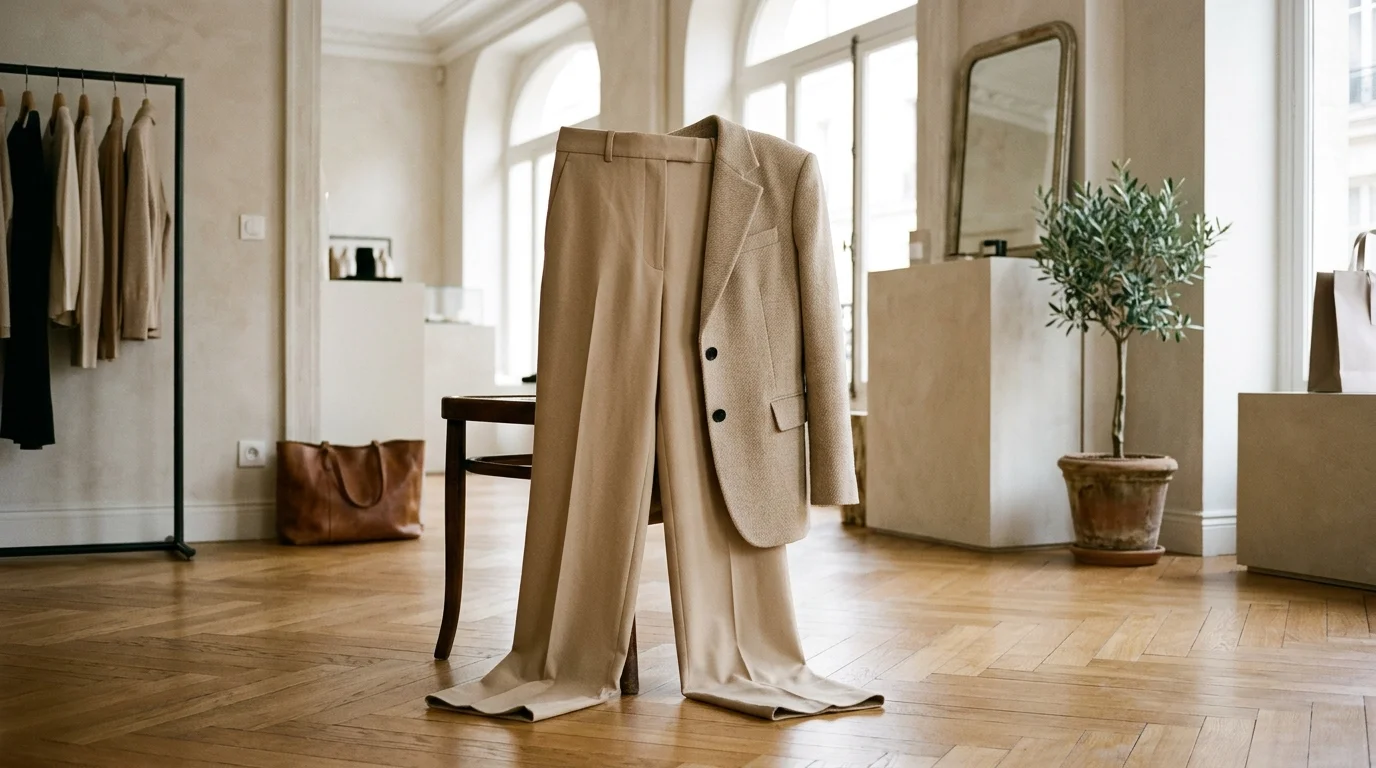
- The "blazertje"—the classic Dutch and European diminutive for a versatile, tailored jacket—has evolved from an exclusively formal corporate garment into the foundational cornerstone of the modern high-low capsule wardrobe.
- Internal jacket architecture dictates drape and longevity: full-canvas and half-canvas horsehair interlinings mold organically to the wearer’s body contours over time, far outlasting cheap fused-glue heat-pressed linings that bubble after dry cleaning.
- Selecting the correct textile is paramount: breathable tropical worsted wool (220–280 GSM) delivers four-season durability, European linen provides relaxed warm-weather breathability, and heavy wool-blend tweed offers structured winter warmth.
- Proportion balancing is the secret to contemporary blazer styling: pairing structured, sharp-shouldered boxy jackets with fluid silk slips, relaxed denim, or casual sneakers creates visually captivating sartorial tension.
- Smart wardrobe investment begins with cost-per-wear (CPW) calculations: a high-quality €280 tailored blazertje worn 120 times per year delivers a vastly lower cost per wear than multiple fast-fashion jackets discarded after one season.
The Sartorial Allure of the Blazertje: Redefining European Tailoring
In European fashion lexicon—particularly throughout the Netherlands, Belgium, and Northern Europe—the affectionate diminutive blazertje denotes far more than a conventional women’s suit jacket. Adding the Dutch diminutive suffix "-tje" transforms a rigid, intimidating piece of corporate uniform into something intimate, effortlessly chic, and endlessly adaptable.
Historically, tailored blazers were rigid emblems of male institutional power: naval reefer jackets worn aboard 19th-century British frigates, rowers’ club flannel jackets at Cambridge, and austere wall-street boardrooms. However, following the revolutionary introduction of Yves Saint Laurent’s Le Smoking tuxedo in 1966, women reclaimed the structured shoulder and lapel as instruments of poise, autonomy, and aesthetic sophistication.
Today, the blazertje represents the ultimate democratic style equalizer. A beautifully tailored blazer can be thrown over an unironed graphic tee to command instant authority on an impromptu Zoom conference, slipped over a slinky silk slip dress for an upscale restaurant dinner, or paired with relaxed denim and canvas sneakers for a Sunday gallery crawl.
Yet, despite its ubiquity, many shoppers struggle to distinguish between a masterfully crafted jacket that elevates an entire wardrobe and a poorly tailored fast-fashion garment that pulls uncomfortably across the shoulder blades. Understanding the architectural mechanics, fabric grades, and proportion rules of the blazertje unlocks effortless daily elegance.
The Anatomy of a Tailored Jacket: Canvas Interlining, Shoulders & Lapels
The longevity and drape of a blazer are determined almost entirely by hidden internal craftsmanship that never appears on a garment’s exterior care label.
1. Internal Chest Construction: Canvas vs. Fused Interlinings
• Full-Canvas Construction: The absolute pinnacle of bespoke tailoring. A floating chest piece crafted from natural horsehair canvas and wool is hand-stitched between the exterior shell fabric and the interior silk lining. Because the canvas is never glued, it moves freely, allowing the jacket to drape naturally. Over months of wear, human body heat molds the animal hair fibers to your individual posture and chest contours, creating a bespoke fit that improves with age.
• Half-Canvas Construction: The industry standard for premium demi-fine tailoring. Natural horsehair canvas spans the upper chest and lapels, ensuring crisp collar roll and structured drape, while the lower body utilizes a lightweight stabilizing fusible web. This delivers 85% of full-canvas elegance at an accessible price point.
• Fused Interlining: Found in budget mass-market garments. Exterior fabric is bonded directly to synthetic backing using thermal adhesive glues. Fused blazers feel stiff and board-like; worse, after three or four commercial dry-cleaning cycles, the industrial adhesive breaks down, causing unsightly blistering, bubbling, and puckering across the chest.
2. Shoulder Architecture: Structured vs. Soft Spalla Camicia
The shoulder establishes the architectural silhouette of the entire outfit:
• The Strong Power Shoulder: Incorporates needle-punched wool felt padding and a structured sleeve-head roll (cigarette head), squaring off the shoulder line to convey architectural strength and commanding presence. Excellent for balancing rounded hips or pear-shaped figures.
• *The Neapolitan Soft Shoulder (Spalla Camicia): Originating in Southern Italy, this construction eliminates thick internal pads entirely. The sleeve is inserted into the armhole with subtle puckering (grinze*), creating a soft, shirt-like shoulder that drapes naturally over the collarbone. Perfect for relaxed, Parisian-style weekend casual outfits.
3. Lapel Variations: Notch, Peak & Shawl Geometry
• Notch Lapel (Step Lapel): The classic triangular cutout where the collar meets the lapel. The most versatile, understated option for everyday office wear and casual outfits.
• Peak Lapel (Pointed Lapel): Lapel points extend upward and outward toward the shoulder tips. This dramatic upward angle draws the viewer’s eye visually outward and upward, creating the illusion of a broader chest and narrower waistline.
• Shawl Collar: A continuous curved satin or wool lapel with no notches or breaks. Reserved primarily for formal smoking jackets, cocktail blazers, and evening velvet soirees.
Tailoring Construction & Quality Evaluation Matrix
Before purchasing a tailored blazertje online or in an atelier, evaluate these critical engineering benchmarks:
| Quality Tier | Internal Interlining | Shoulder Seam Technique | Lapel Roll Quality | Expected Lifespan | Typical Cost Range |
| :--- | :--- | :--- | :--- | :--- | :--- |
| Bespoke / Haute Couture | 100% Hand-Stitched Full Horsehair Canvas | Hand-padded roped sleeve head with pick-stitching | 3D rolling lapel that never lies flat like cardboard | 20+ Years (Heirloom Grade) | €1,200 – €4,000+ |
| Premium European Ready-to-Wear| Half-Canvas with Horsehair Chest Piece | Clean tailored seam with minimal wool padding | Soft, natural curve with interior floating roll | 7 – 12 Years | €280 – €750 |
| High-Street Mid-Tier | Advanced Thermo-Fused Micro-Laminate | Light foam composite padding | Moderate roll, machine pick-stitched | 3 – 5 Years | €120 – €250 |
| Fast-Fashion Budget | Cheap Polyvinyl Fused Glue Backing | Stiff foam block or unpadded raw serged edge | Pressed completely flat with industrial iron | 6 – 18 Months (Bubbles) | €35 – €90 |
Textile Science: Selecting the Perfect Seasonal Fabric & Weight (GSM)
A blazer’s versatility is deeply linked to fiber composition and fabric weight, measured in grams per square meter (GSM):
1. Four-Season Worsted Wool (240 – 280 GSM)
Worsted wool is spun from long-staple sheep’s wool fibers that are combed parallel before spinning, yielding a smooth, hard-wearing yarn with subtle natural luster. Worsted wool breathes exceptionally well, naturally repels light moisture and stains, resists creasing, and regulates microclimatic body temperature in both air-conditioned offices and breezy outdoor streets.
2. Summertime European Linen & Cotton-Linen Blends (180 – 220 GSM)
Flax linen is the quintessential warm-weather textile. Its hollow cellulose fibers wick perspiration rapidly and allow continuous airflow. Pure linen develops natural, romantic crumples throughout the day; if you prefer a crisper look that resists heavy creasing, choose a 60% linen / 40% long-staple cotton blend that retains linen’s breathability with added cotton tensile resilience.
3. Autumn & Winter Heavyweights: Tweed, Bouclé & Velvet (320 – 450 GSM)
When temperatures drop, heavy textured textiles take center stage. Scottish Donegal tweeds and wool bouclés provide rich visual and tactile depth. For festive evening galas, plush cotton-pile velvet absorbs light luxuriously, creating deep jewel-tone hues (such as midnight navy, emerald green, and burgundy).
Investing in enduring staple outerwear like these forms the bedrock of thoughtful, economical spending, as explored in our fashion savings guide on building an affordable capsule wardrobe.
The 7 Definitive Blazertje Outfit Formulas: From Executive Boardroom to Weekend Casual
The magic of the blazertje lies in styling contrasts. The modern approach avoids matchy-matchy corporate stiffness in favor of dynamic high-low juxtapositions:
Formula 1: The Executive Power Move (Monochrome Tailoring)
Pair a double-breasted charcoal or navy wool blazertje with matching wide-leg pleated trousers. Beneath the jacket, skip the traditional stiff collared button-down shirt; instead, layer a whisper-thin ribbed merino wool or cashmere turtleneck. Complete the look with pointed leather ankle boots and architectural gold earrings.
Formula 2: The Parisian Weekend Chic (Blazer + Relaxed Denim + White Tee)
The ultimate street-style uniform across Amsterdam and Paris. Take an oversized houndstooth or camel blazertje, pair it with high-rise, straight-leg vintage blue jeans and a pristine heavyweight white organic cotton tee. Elevate the look with a rich cognac leather belt and dark tortoiseshell sunglasses.
Formula 3: The Urban High-Low Crossover (Blazer + Graphic Streetwear + Canvas Sneakers)
Bridge high tailoring with youth street culture by wearing a slightly slouchy black blazertje unbuttoned over a high-density graphic t-shirt, taking cues from our guide to BabelTee trendy graphic tees and urban streetwear. Ground the ensemble with classic canvas high-tops, applying the styling principles detailed in our manual on how to style and care for iconic Konversky sneakers.
Formula 4: The 90s Slip Dress Night-Out Glamour
Drape an oversized black masculine tuxedo blazertje casually over the shoulders of a bias-cut champagne or emerald silk slip dress. The sharp, broad shoulders of the jacket frame the delicate fragility of the silk, delivering effortless, seductive contrast.
Accenting the open décolletage of a slip dress and structured lapels with scintillating multi-faceted jewelry creates breathtaking sparkle, as demonstrated in our comprehensive guide to Shihuanuo crystal jewelry collections and styling.
Formula 5: The Smart-Casual Tech Innovator (Blazer + Tailored Bermuda Shorts)
For warm-weather creative agency or tech office environments, pair a relaxed linen-blend blazertje with matching tailored knee-length Bermuda shorts, a minimalist scoop-neck bodysuit, and chunky leather penny loafers.
Formula 6: The Winter Textured Layering Masterclass (Blazer Under a Wool Trench)
In deep winter, utilize your blazertje as an insulating mid-layer. Wear a fitted Glen plaid wool blazer over a fine-gauge knit, topped with an expansive camel double-faced wool trench coat. Leaving the trench coat unbuttoned reveals rich textural depth.
Formula 7: The Belted Hourglass Transformation
Transform an oversized boxy blazer into a feminine, sculpted peplum silhouette by cinching the exterior waist tightly with a wide leather saddle belt or a metallic chain belt over a pleated midi skirt.
Body Proportions & Fit Engineering: Tailoring to Every Silhouette
A blazer only looks effortless when its proportions harmonize with your natural body geometry:
• Petite Figures (Under 5’4” / 162 cm): Avoid blazers that hit mid-thigh, which can visually shorten your legs. Instead, opt for a cropped blazertje ending right at the hip bone, or an open single-breasted blazer ending just above the hip curve to elongate vertical lines.
• Hourglass & Curvy Figures: Single-button blazers with deep, plunging V-lapels and gentle waist suppression flatter natural curves without pulling. Avoid oversized boxy double-breasted styles that obscure the waist.
• Tall & Athletic Builds: Blessed with vertical clearance, tall frames look spectacular in dramatic, low-button-stance double-breasted blazers with broad lapels and dropped hems hitting the mid-thigh.
• Fuller Bust Considerations: Ensure the jacket lapels lie completely flat against the chest without flaring outward when unbuttoned. If a blazer pulls or creates an "X" crease across the button when fastened, size up to fit the chest and have a tailor nip in the back waist seams.
Color Palette Theory: Curating an Enduring 4-Blazer Rotation
Rather than cluttering your closet with dozens of mediocre fast-fashion jackets, sartorial stylists advocate for a disciplined four-blazer rotation that satisfies every social, corporate, and climatic demand:
1. The Anchor: Midnight Black or Deep Charcoal Worsted Wool
The ultimate crisis solver. A sharp black or charcoal blazer handles formal client presentations, funerals, cocktail galas, and sleek nocturnal outings with equal aplomb. It pairs effortlessly with monochrome styling, crisp white button-downs, and jewel-tone slip dresses.
2. The Daytime Neutral: Camel, Sand Beige or Oatmeal Melange
Warm earthy neutrals soften the harshness of tailoring, making them ideal for daytime coffee meetings, creative studio sessions, and spring outings. Camel flannel or sand-hued cotton-linen blazers pair harmoniously with light-wash denim, white linen trousers, and soft terracotta knitwear.
3. The Heritage Classic: Navy Double-Breasted with Horn Buttons
Navy blue carries a storied maritime pedigree that conveys trustworthiness and polish without the severe formality of jet black. A double-breasted navy blazer with matte brown horn buttons or subtle brass crest buttons is a quintessential European prep and Riviera summer staple.
4. The Statement Texture: Glen Plaid, Houndstooth or Jewel-Tone Velvet
The fourth slot belongs to personality and texture. A subtle black-and-cream Prince of Wales check or houndstooth tweed adds instant visual interest to plain knitwear and denim. For winter celebrations, a rich forest green, deep plum, or sapphire velvet blazertje delivers festive luxury.
Garment Longevity & Cost-Per-Wear Economics: Maximizing Your Investment
High-grade tailoring requires intelligent maintenance to preserve fiber elasticity and prevent premature aging:
1. The Mathematical Cost-Per-Wear (CPW) Formula
In modern sartorial economics, the true purchase price of a garment is not the number printed on the checkout invoice; it is calculated using the Cost-Per-Wear formula: CPW = (Total Purchase Price + Lifetime Maintenance Costs) ÷ Total Number of Wears.
Consider the contrasting math:
• The Fast-Fashion Fused Jacket: Purchased for €79. Made from 100% polyester with glued interlining. It fits awkwardly, feels uncomfortably hot, and bubbles after two dry cleanings. It is worn only 6 times over two years before being discarded into a landfill. CPW = €79 ÷ 6 = €13.16 per wear.
• The Premium Half-Canvas Wool Blazertje: Purchased for €320. Made from breathable 100% Italian worsted wool with horsehair canvas. It drapes impeccably, resists creasing, and is worn twice a week across work, dinners, and weekend outings (approx. 90 times per year). Over a 5-year lifespan (450 wears) with €80 in maintenance: CPW = (€320 + €80) ÷ 450 = €0.88 per wear!
Investing in enduring staple outerwear like this forms the bedrock of thoughtful, economical spending, as explored in our fashion savings guide on building an affordable capsule wardrobe.
2. The Perils of Over-Dry-Cleaning and Fiber Preservation
Commercial dry-cleaning subjects delicate animal fibers to intense chemical baths (perchloroethylene) and high-temperature hydraulic presses. Over time, this strips natural lanolin oils from wool, turning fabrics brittle and shiny. Dry-clean your blazertje only once or twice a year; between wears, refresh the garment using a handheld vertical garment steamer and hang it outdoors on a covered balcony for an hour.
3. Anatomical Cedar Hangers and Wool Brushing
Never hang a tailored jacket on a flimsy wire or thin plastic hanger, which dents the shoulder padding and ruins the sleeve-head roll. Always invest in wide-shoulder contoured wooden cedar hangers that support the entire shoulder span while naturally repelling clothing moths. Additionally, brushing your wool blazer downward after each wear with a natural pig-bristle garment brush removes ambient dust and restores fiber loft.
4. Sourcing Quality Tailoring Online
When hunting for archival European tailoring, vintage blazers, and authenticated designer outerwear, knowing how to navigate verified digital platforms ensures consumer security, aligning with our analysis of how to choose the right marketplace for your business and purchases.
Frequently Asked Questions
What is the difference between a blazer and a blazertje?
In Dutch and European fashion vocabulary, "blazertje" is the affectionate diminutive for a blazer jacket. While "blazer" often implies a stiff, formal suit component, a "blazertje" refers to a chic, versatile, and stylish jacket designed for creative high-low pairing with jeans, dresses, or tailored trousers.
How should a tailored blazertje fit on the shoulders?
The shoulder seam of the blazer should sit directly on the corner of your natural shoulder bone. If the seam droops over your arm, the jacket is too large (unless intentionally designed as an oversized drop-shoulder cut); if it bunches or pulls tightly when crossing your arms, it is too tight.
Can you wear a blazertje with casual sneakers?
Yes! Pairing a structured wool or linen blazertje with clean canvas sneakers (such as white or black Converse All Stars) and straight-leg jeans is one of the most celebrated European smart-casual street-style uniforms.
How often should a wool blazertje be dry-cleaned?
A high-quality wool blazertje should only be dry-cleaned once or twice per season, or when visibly stained. Routine dry cleaning strips natural wool lanolin. Instead, freshen your jacket by steaming it vertically and brushing it with a natural horsehair garment brush.
Should the sleeve of a blazertje cover my wrists completely?
Proper tailoring dictates that the blazer sleeve cuff should end right at the break of the wrist bone, allowing about 0.5 to 1 cm of your shirt cuff, knit sweater, or bare wrist (adorned with a bracelet or watch) to show subtly.
Sarah Jenkins is a seasoned corporate speechwriter and organizational communications strategist with 15 years of experience counseling enterprise executives, board directors, and senior leaders on high-stakes rhetoric.
Further Recommended Readings from Our Desks
Pros of a Business Partnership: 8 Big Advantages, Types & Agreement Tips
An executive masterclass on business partnerships: 8 foundational strategic advantages, legal entity structures (GP, LP, LLP, LLC), partnership agreement anatomy, and dispute-proofing protocols.
Early Education Franchise Guide: Startup Costs, Top Childcare Brands & ROI
The definitive institutional guide to early childhood education and preschool franchises: Item 7 real estate startup costs, top brand financial metrics, state regulatory ratios, and franchisee ROI.
Youth Entrepreneurship Support Programme: Grants, Mentorship & Funding for Young Founders
The ultimate guide to youth entrepreneurship support programmes: non-dilutive grant capital, top global accelerators, elite mentorship frameworks, and application strategies for founders under 30.