
Fashion Savings Guide: How to Build a Stylish Wardrobe on a Budget
The comprehensive blueprint for curating an enduring, high-impact wardrobe without financial strain: mastering the 25-piece capsule architecture, the Cost-Per-Wear formula, seasonal markdowns, and textile longevity science.

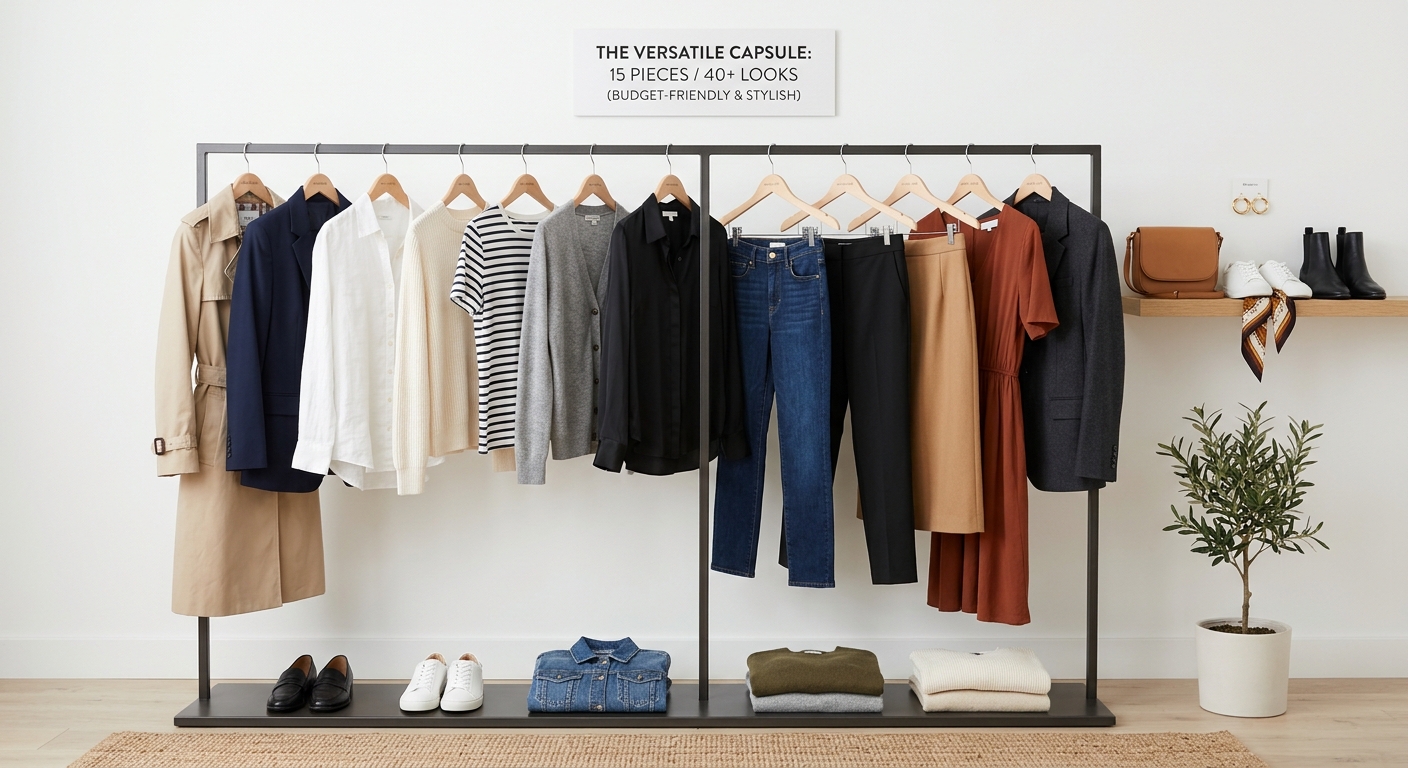
- True fashion savings are achieved through architectural curation rather than impulse bargain-hunting: a deliberate 25-piece modular capsule outperforms a closet packed with discount fast-fashion items.
- The Cost-Per-Wear (CPW) formula reveals that a durable $180 wool coat worn 150 times ($1.20/wear) delivers exponentially better economic value than a $35 polyester jacket discarded after 8 wears ($4.38/wear).
- Aligning major apparel investments with cyclical wholesale liquidation windows—particularly late January winter clearances and late July summer closeouts—consistently captures 60% to 75% retail discounts.
- Textile composition dictates garment lifespan: prioritize long-staple cotton, natural sheep wool, and pure European linen over petroleum-derived acrylic and polyester blends prone to premature pilling.
- Professional tailoring is the single highest-ROI fashion upgrade: a $25 alteration to hem length, waist taper, or sleeve proportions elevates modest off-the-rack garments into bespoke silhouettes.
The Economic Fallacy of Fast Fashion: Why Cheap Garments Deplete Your Wealth
The modern retail landscape promotes a deceptive narrative: that dressing well requires a perpetual inflow of newly minted trend garments purchased at rock-bottom prices. Each week, ultra-fast-fashion conglomerates release thousands of brand-new synthetic designs, capitalizing on digital micro-trends and engineered shopping impulses.
Yet millions of consumers who spend hundreds of dollars monthly on discounted apparel find themselves confronting an overflowing closet with "nothing to wear." This phenomenon is not an emotional quirk; it is the predictable mathematical outcome of disposable textile manufacturing.
When an apparel brand manufactures a $12 garment, severe compromises are made at every phase of the value chain. Fibers are spun from short-staple polyester filaments that unravel under standard laundering friction. Seams are assembled with single-thread chain stitches rather than reinforced lockstitches, and garment patterns are cut with minimal seam allowances to maximize fabric yield. Within three to five wash cycles, these pieces lose their structural shape, pill heavily across friction zones, and fade unevenly.
The true secret to lasting fashion savings lies in recognizing that low purchase price is rarely synonymous with low cost. To break free from this costly cycle, consumers must transition from transactional shopping to an asset-based wardrobe philosophy, treating each clothing acquisition as an investment in daily personal presentation, personal branding, and long-term utility.
The Cost-Per-Wear (CPW) Mathematical Model: Auditing True Garment Value
Professional financial analysts assess capital expenditures based on total lifespan productivity. In personal wardrobe management, the metric that governs smart spending is the Cost-Per-Wear (CPW) formula:
$$\text{Cost-Per-Wear} = \frac{\text{Initial Purchase Price} + \text{Lifetime Maintenance \& Tailoring Costs} - \text{Resale Value}}{\text{Total Lifetime Wears}}$$
To demonstrate the power of this formula, consider a real-world comparative audit between two common outerwear purchasing paths across a three-year evaluation horizon:
| Evaluation Metric | Path A: Fast-Fashion Synthetic Trench | Path B: Tailored Worsted Wool Coat | Economic Implication |
| :--- | :--- | :--- | :--- |
| Initial Purchase Price | $45.00 | $220.00 | Fast fashion appears $175 cheaper upfront |
| Material Composition | 100% Lightweight Polyester | 80% Worsted Wool / 20% Polyamide | Natural fibers offer 5x abrasion resistance |
| Estimated Lifespan | 4 months (1 season) | 5+ years (Multi-season staple) | Wool withstands recurring wear and weather |
| Expected Lifetime Wears | 12 wears before zipper breaks | 180 wears across 3 years | High structural durability permits weekly rotation |
| Maintenance & Repair | $0 (Non-repairable seam tear) | $25 (Initial sleeve hem alteration) | Tailored garment fits flawlessly |
| Resale Salvage Value | $0 (Donation or landfill) | $65 (Consignment resale platform) | Premium brand retains secondary market value |
| True Net Cost | $45.00 | $180.00 ($245 total outlay minus $65 resale) | Wool coat investment recovers cash equity |
| Final Cost-Per-Wear | $3.75 per wear | $1.00 per wear | Quality wool coat is 73% cheaper per wear |
When evaluated through this rigorous mathematical lens, the initial price tag becomes secondary to lifespan performance. Investing in durable, high-integrity garments dramatically lowers your annualized clothing expenditure, allowing you to achieve lasting financial stability and psychological peace of mind instead of recurring wardrobe anxiety.
The 25-Piece Core Capsule Architecture: Maximum Versatility on a Fixed Budget
A capsule wardrobe is not an exercise in monastic deprivation; it is a calculated engineering system that produces over 75 unique outfit combinations from a tightly coordinated core of 25 modular garments.
By restricting the core color palette to neutral foundational shades (charcoal, navy, camel, ivory, and black) accented by two complementary secondary tones (such as olive and burgundy), every top naturally matches every bottom. This eliminates decision fatigue and guarantees cohesive aesthetic elegance every single morning.
1. Foundational Tops (8 Pieces)
• Crisp Cotton Poplin Button-Down (2): One in pure optic white, one in classic French blue or subtle micro-stripe. Ensure a minimum fabric weight of 120 GSM so the shirt maintains its collar roll and structure without being see-through.
• Refined Crewneck & V-Neck Tees (3): Heavyweight 100% combed ring-spun organic cotton tees in white, heather grey, and black. Avoid thin rayon blends that cling uncomfortably.
• Fine-Gauge Knit Sweaters (3): Two merino wool crewnecks (navy and charcoal) and one camel cashmere or cotton-cashmere blend. Fine-gauge knits transition seamlessly from casual denim to boardroom tailoring.
2. Structured Bottoms (6 Pieces)
• Dark Indigo Selvedge Denim (1): Clean, unwashed, rinse-indigo denim with zero artificial whiskering or distressing. Dark selvedge jeans can be dressed down with sneakers or paired with an Italian wool blazer for business casual settings.
• Medium-Wash Straight-Leg Denim (1): A relaxed, timeless cut in durable 13oz to 14oz non-stretch or 1% elastane cotton denim for weekend versatility.
• Tailored Flat-Front Trousers (2): One pair in charcoal grey tropical wool, one pair in rich navy. Ensure the waistband has internal canvas curtaining to prevent rollover.
• Elevated Cotton Chinos (2): Tailored straight-leg chinos in khaki-tan and olive drab with clean welted back pockets.
3. Layering Outerwear & Tailoring (4 Pieces)
• Unstructured Wool Blazer (1): A soft-shouldered navy or houndstooth sport coat crafted from hopsack or flannel wool that pairs effortlessly with trousers or jeans.
• Classic Trench or Mac Coat (1): A water-resistant cotton-gabardine mid-thigh overcoat in camel or stone-khaki.
• Utility Field Jacket or Denim Jacket (1): A durable wax-cotton or heavyweight denim chore coat that provides tactile texture for casual weekend outings.
• Heavy Winter Overcoat (1): A single-breasted knee-length wool-blend overcoat in charcoal or black with structured lapels.
4. Footwear & Leather Accessories (7 Pieces)
• Minimalist Leather Dress Sneakers (1): Clean white low-top sneakers crafted from full-grain calfskin leather with stitched Margom rubber cupsoles.
• Classic Leather Loafers or Oxfords (2): One pair of dark brown penny loafers and one pair of black Goodyear-welted dress shoes.
• Rugged Chelsea or Heritage Work Boots (1): Goodyear-welted leather boots with storm welts and Vibram or Dainite rubber soles.
• Reversible Leather Belts & Carryall Bags (3): One full-grain black/brown leather belt, one brass-buckle casual belt, and one structured canvas-leather tote or briefcase.
Seasonal Retail Arbitrage: How to Capture 60% to 75% Off-Price Discounts
Retail margins in modern apparel commerce are heavily front-loaded. Traditional department stores and digital boutiques mark up garments by 250% to 400% above wholesale manufacturing costs when a new collection debuts (Full Retail Price).
However, fashion inventory carries steep holding and warehousing costs. Commercial merchants operate on rigid quarterly merchandising calendars, forcing them to liquidate unsold inventory to free up warehouse space for incoming seasons. Understanding these systemic inventory cycles allows strategic shoppers to purchase premium designer garments at or below factory wholesale prices.
The Master Annual Fashion Clearance Calendar
• January to Mid-February (Winter Deep Liquidation): This is the single best window of the year to purchase heavy winter coats, cashmere knitwear, wool trousers, and leather boots. Retailers slash prices by 60% to 80% to clear out post-holiday inventory before spring merchandise arrives in March.
• May (Memorial Day Spring Clearance): Excellent opportunities to acquire mid-weight transitional jackets, light sweaters, and office tailoring as merchants prep for high-summer collections.
• July to Mid-August (Summer Closeout & Back-to-School): Summer resort wear, linen shirts, chino shorts, and swimwear enter final clearance phases with steep progressive promotional codes ("Take an extra 40% off sale items").
• Late October to Early November (Pre-Holiday Flash Windows): Mid-season promotional markdowns occur prior to the chaotic holiday shopping rush. Savvy shoppers utilize price-tracking browser tools to lock in genuine staple discounts before artificial Black Friday price inflations.
To optimize your digital shopping across multi-brand storefronts and understand how platforms structure commission take-rates and price promotional codes, consult our deep dive on how to choose the right marketplace for your business.
Sourcing Secrets: Mastering Online Consignment and Vintage Luxury Resale
The explosion of digital recommerce platforms (such as Poshmark, eBay, Depop, The RealReal, and Vestiaire Collective) has revolutionized budget wardrobe curation. Millions of premium garments with 90% of their lifespan remaining are listed daily by motivated individual sellers for a fraction of original retail costs.
However, successfully navigating online resale requires strategic discipline and rigorous inspection methodologies:
1. Filter by Fabric Composition Rather Than Brand Name
Fast-fashion brands frequently license prestigious designer names or use deceptive marketing terms like "silky finish" or "cashmere touch." When searching digital resale platforms, search directly for pure fiber keywords: "100% cashmere sweater", "selvedge raw denim", "worsted wool trousers", or "Goodyear welted shoes". Premium fabrics are inherently durable and immediately elevate your daily aesthetic.
2. Inspect Critical High-Wear Friction Zones
Before submitting an offer or completing checkout, request detailed close-up photographs of four vulnerable garment zones:
• The Underarms: Inspect for deodorizing salt build-up, fabric discoloration, and seam pulling.
• The Trouser Crotch & Inner Thighs: Friction from walking can thin fabric severely; look for signs of wear or fragile previous patch repairs.
• The Collar Stand and Cuff Edges: Look for fraying, skin-oil rings, or discoloration on structured shirts and blazers.
• Shoe Outsoles and Heel Drag: On pre-owned leather shoes, check whether the leather sole has developed soft sponge-like hollows or significant heel wear that would necessitate a costly cobbler resole.
3. Leverage Assertive Negotiation and Saved Searches
Many private sellers price items with significant margin for negotiation. Use automated saved searches with price alerts, and submit respectful, reasonable offers 15% to 25% below listing prices. When resolving transaction discrepancies or communicating with marketplace merchants, maintaining professional assertiveness—as detailed in our guide to how to stand up for yourself with assertive communication strategies—ensures your buyer protection rights are fully respected.
Garment Longevity Science: Laundering, Fabric Care & Maintenance Protocols
The greatest threat to your clothing budget is not normal physical wear; it is aggressive, incorrect laundering. Modern commercial washing machines and heated tumble dryers expose garments to harsh mechanical agitation, chemical oxidation, and high thermal stress that rapidly degrades natural and synthetic fibers alike.
By adopting professional garment care practices, you can easily triple the lifespan of your wardrobe:
• Wash Less Frequently, Spot Clean More: Unless a garment has direct contact with bodily sweat (underwear, athletic gear, base-layer socks), outerwear, denim, blazers, and knitwear do not need to be washed after every wear. Allow wool and denim to air out on wooden hangers near open air to naturally dissipate odors.
• Cold Water and Gentle Cycles Only: Hot water weakens fiber elasticity, accelerates dye bleeding, and causes irreversible dimensional shrinkage in cotton and wool. Wash everyday garments in cold water (below 30°C/85°F) using gentle, pH-neutral liquid detergents.
• Eradicate the Heated Tumble Dryer: The lint screen in your clothes dryer is filled with shredded pieces of your clothing. High heat bakes fibers, snaps elastane bonds, and warps seam stitching. Hang dry your shirts, trousers, and chinos on drying racks, and dry heavy knit sweaters flat on mesh screens to avoid hanger stretch.
• Invest in a Quality Fabric Shaver & Cedar Storage: Natural woolens naturally produce small surface pills through everyday friction. Rather than discarding the garment, run an electric fabric depiller across the surface once a season to restore factory-smooth luster. Protect woolens from moth larvae by storing clean sweaters in breathable cotton zip bags with aromatic natural cedar blocks.
Furthermore, understanding the complexities of international trade, cross-border shipping, and overseas fabric sourcing can deepen your appreciation of garment provenance, as analyzed in our review of cross-border e-commerce news, logistics, tariffs and global selling.
The Tailoring Multiplier: Turning Inexpensive Off-The-Rack Pieces into Custom Fits
The visual difference between an outfit that looks cheap and one that looks exceptionally expensive rarely comes down to brand labels; it almost always comes down to proportional fit.
Off-the-rack clothing is manufactured to fit an idealized statistical median body shape, leaving garments baggy in the torso, excessively long in the sleeves, or bunching awkwardly around the shoes. Establishing a working relationship with a skilled local alterations tailor is the ultimate secret weapon for the budget-conscious professional.
The 4 High-ROI Tailoring Adjustments
• Sleeve Hemming on Blazers and Jackets ($20–$35): Sleeves should end precisely at the break of the wrist bone, allowing 1/4 to 1/2 inch of shirt cuff to show. This simple alteration instantly gives an off-the-rack blazer a bespoke, made-to-measure appearance.
• Trouser Inseam Hemming & Cuffing ($12–$20): Eliminate sloppy fabric pooling over your footwear. Request a "slight break" or "no break" hemline that falls cleanly against the top of your shoes, creating a clean, lengthening vertical line.
• Waist Suppression on Button-Down Shirts ($15–$25): Adding vertical back darts eliminates billowing excess fabric around your lower back and waist, giving standard dress shirts a flattering slim silhouette.
• Trouser Tapering ($18–$30): Narrowing wide trouser legs from the knee down modernizes older suits and vintage thrift finds, transforming dated boxy cuts into sharp contemporary profiles.
When boutique fashion merchants deliver newly tailored garments with exceptional care, the unboxing moment builds brand equity, utilizing principles outlined in our study on the art of writing thank you for your business notes and gift cards.
Frequently Asked Questions
How much money should I spend each month on clothes on a budget?
Financial planners typically recommend allocating between 3% and 5% of your net monthly take-home income toward clothing, footwear, and maintenance. On a $4,000 monthly take-home salary, this equates to a sustainable budget of $120 to $200 per month, which should be accumulated across several months to fund high-impact seasonal investment pieces.
What is the single most important garment to invest in for fashion savings?
A high-quality, tailored outerwear piece—such as an 80%+ wool overcoat or classic trench coat—delivers the highest aesthetic return on investment. Outerwear is the first piece observed by others, sets the tone for your entire outfit, and protects your underlying garments from seasonal wear.
How do I know if an inexpensive garment will last before buying it?
Inspect three physical indicators: 1) Fabric tag: Prioritize 100% natural fibers (cotton, wool, linen) over acrylic and polyester. 2) Stitch density: Look for tightly spaced, double-reinforced lockstitches along stress points. 3) Fabric weight: Hold the garment up to bright light; if you can easily see through the weave of a non-sheer garment, the textile density is low and prone to rapid tearing.
Is thrifting really cheaper than buying from fast-fashion discount outlets?
Yes, because thrift and consignment sourcing allows you to acquire luxury-tier natural fabrics and Goodyear-welted footwear for 80% to 90% below their original retail prices. A $20 thrifted vintage wool blazer will outlive five consecutive $50 fast-fashion polyester jackets.
Can tailoring make cheap clothes look expensive?
Absolutely. A $40 off-the-rack blazer paired with $25 in strategic sleeve hemming and waist suppression will consistently look more refined and flattering than a $500 designer jacket that fits poorly off the rack.
Sarah Jenkins is a seasoned corporate speechwriter and organizational communications strategist with 15 years of experience counseling enterprise executives, board directors, and senior leaders on high-stakes rhetoric.
Further Recommended Readings from Our Desks
Pros of a Business Partnership: 8 Big Advantages, Types & Agreement Tips
An executive masterclass on business partnerships: 8 foundational strategic advantages, legal entity structures (GP, LP, LLP, LLC), partnership agreement anatomy, and dispute-proofing protocols.
Early Education Franchise Guide: Startup Costs, Top Childcare Brands & ROI
The definitive institutional guide to early childhood education and preschool franchises: Item 7 real estate startup costs, top brand financial metrics, state regulatory ratios, and franchisee ROI.
Youth Entrepreneurship Support Programme: Grants, Mentorship & Funding for Young Founders
The ultimate guide to youth entrepreneurship support programmes: non-dilutive grant capital, top global accelerators, elite mentorship frameworks, and application strategies for founders under 30.