
Masgonzola (Gorgonzola con Mascarpone): Flavor Profile, Pairings & Italian Recipes
The ultimate culinary and trade guide to Italy’s legendary layered cheese: Lombardy dairy heritage, biochemical microbial balance, sommelier wine pairing matrices, 5 authentic recipes, and cold-chain e-commerce logistics.

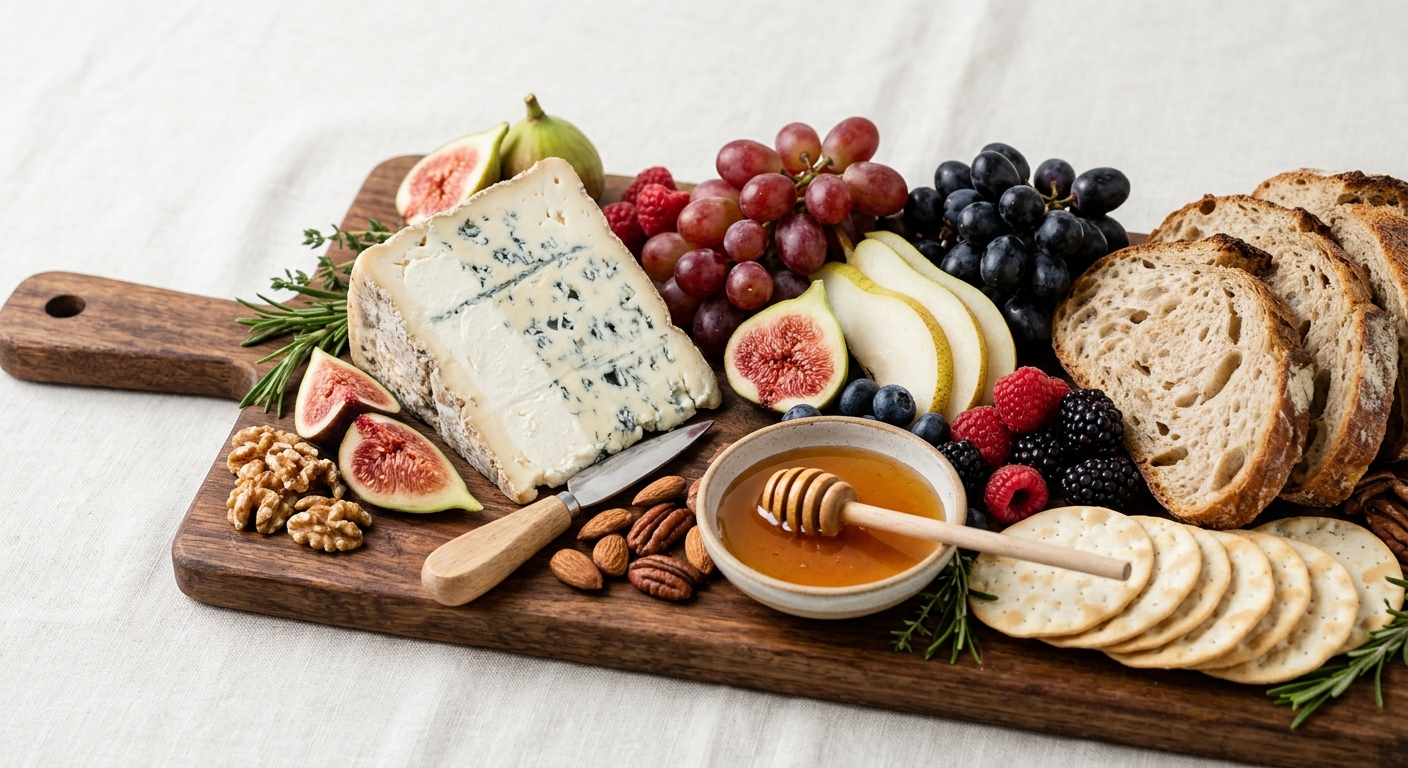
- Masgonzola—commercially celebrated as Gorgonzola con Mascarpone or Torta Mascarpone e Gorgonzola—is a masterwork of Northern Italian cheesemaking that harmonizes the pungent, savory mold veins of Gorgonzola PDO with the lush, buttery sweetness of fresh triple-cream Mascarpone.
- Originating in the verdant dairy plains of Lombardy and Piedmont, the cheese is constructed either through delicate hand-layering (lasagna style) or homogeneous whipped blending, depending on regional artisanal tradition.
- Biochemically, the high butterfat content (exceeding 60% in dry matter) of Mascarpone buffers the sharp, peppery ketones produced by Penicillium roqueforti, making it an ideal gateway cheese for consumers intimidated by intense blue varieties.
- In gastronomy, Masgonzola melts effortlessly into silky sauces without breaking into grease, serving as a luxurious base for potato gnocchi, carnaroli risotto, and seared beef tenderloin.
- For specialty grocery e-commerce retailers, Masgonzola demands strict 2°C to 4°C cold-chain logistics, vacuum skin packaging, and expedited transit to prevent lipid oxidation, phase separation, and ammoniation.
Lombardy Dairy Craftsmanship: The Origins and Heritage of Masgonzola
In the pantheon of classic Italian dairy craftsmanship, few cheeses achieve the sumptuous, decadent equilibrium of Masgonzola—formally designated across Italian salumerie and cheese affineurs as Gorgonzola con Mascarpone or Torta Mascarpone e Gorgonzola.
This extraordinary hybrid cheese is the natural culmination of centuries of cheesemaking mastery centered in the fertile Po River Valley (Pianura Padana), spanning the historic dairy hubs of Lombardy and eastern Piedmont. For generations, this region has stood as the epicenter of Italy’s most prestigious cow’s milk cheeses, benefiting from lush alpine pastures, mineral-rich river runoff, and indigenous bovine breeds prized for their high-butterfat milk yields.
While Gorgonzola PDO boasts an ancient lineage dating back to at least 879 AD in the eponymous town outside Milan, the genius concept of marrying Gorgonzola with Mascarpone emerged in the 20th century as an artisanal torta (layered cake). Traditional Italian cheesemakers recognized that while Gorgonzola Dolce possessed a magnificent, aromatic complexity, its intense blue-veined bite could occasionally overpower sensitive palates.
By alternating alternating ribbons of creamy, piquant Gorgonzola with velvety layers of fresh, lactic triple-cream Mascarpone, Northern Italian caseifici created an instant culinary sensation. In contemporary culinary discourse and specialty gourmet e-commerce, the portmanteau Masgonzola has become universal shorthand for this luxurious, spoonable delicacy, celebrated by Michelin-starred chefs and passionate home epicures alike.
Biochemical & Microbial Synergy: Balancing Penicillium Roqueforti with Triple-Cream Curd
To understand why Masgonzola feels so uniquely unctuous on the tongue, one must delve into the biochemistry of its two constituent cheeses. Their fusion is not a mere mechanical mixture, but an exquisite study in dairy thermodynamic and microbiological contrast.
1. Gorgonzola Dolce: The Fermentative Engine
The blue component of Masgonzola is almost exclusively Gorgonzola Dolce PDO (the younger, sweeter variant aged between 50 and 60 days, as opposed to the firm, crumbly Gorgonzola Piccante aged up to 150 days). Gorgonzola is produced from whole pasteurized cow’s milk inoculated with specific strains of Penicillium roqueforti molds along with lactic acid bacteria.
During aging, copper needles pierce the curd wheels, introducing ambient oxygen into the interior fissures. This triggers mold sporulation, generating characteristic blue-green veins. As the mold matures, its enzymatic lipases and proteases break down milk fats into pungent free fatty acids, methyl ketones (particularly 2-heptanone and 2-nonanone), and lactones, producing the distinctive earthy, mushroom-like, and spicy flavor notes.
2. Mascarpone: The Acid-Coagulated Triple-Cream Cushion
Technically speaking, Mascarpone is not produced through standard rennet enzymatic coagulation; rather, it is a coagulated heavy cream. Fresh cow’s milk cream boasting a colossal butterfat content of 40% to 55% is heated gently to 85°C (185°F). Citric acid, acetic acid, or tartaric acid is slowly stirred in, triggering immediate thermo-acid curd precipitation.
The resulting curd contains zero bitter rennet residuals and an astronomical dry-matter fat content often exceeding 75%. Mascarpone is pure, sweet, lactic luxury—packed with sweet lactose sugars, velvety milk lipids, and a clean, delicate finish reminiscent of clotted cream.
3. The Molecular Marriage: Fat Buffering and Taste Receptor Physics
When Mascarpone and Gorgonzola are combined, a fascinating sensory phenomenon occurs. Human taste buds detect the sharp, peppery bite of Penicillium roqueforti via specific trigeminal and gustatory receptors. The dense, coating lipid molecules of the Mascarpone cream physically coat the tongue’s papillae in a microscopic protective lipid film.
This attenuates the initial stinging spike of blue mold acidity, allowing the brain to perceive the subtle floral, buttery, and earthy terroir notes of the Gorgonzola without the overwhelming burning sensation often associated with intense blue cheeses. It is an ideal "gateway" cheese that converts die-hard blue cheese skeptics into devoted aficionados.
Sensory Profile & Tasting Notes: Deciphering the Layers of Flavor and Mouthfeel
A proper sensory appraisal of artisanal Masgonzola involves observing visual architecture, aromatic bouquet, tactile mouthfeel, and the sequential evolution of flavors across the palate.
1. Visual Appearance and Architecture
When sliced perpendicularly with a sharp, warm wire cutter, authentic Masgonzola reveals a striking striated cross-section. Pristine snow-white strata of dense Mascarpone alternate harmoniously with creamy ivory bands riddled with moss-green and slate-blue mold veining. High-end variations are often crowned with crushed toasted Piedmont hazelnuts or chopped green Bronte pistachios pressed into the exterior rind.
2. Aromatic Complexity
At refrigerated temperatures (4°C), the aroma is modest and gently sweet. However, once brought to room temperature (18°C to 20°C) for thirty minutes, the aromatic volatiles explode. You are greeted by a seductive bouquet of fresh warm butter, sweet clover milk, forest floor dampness, white button mushrooms, cellar stone, and a faint, tantalizing whisper of spicy ammonia.
3. Mouthfeel and Textural Dissolution
On the tongue, Masgonzola offers zero graininess or chalky crumble. It melts at human body temperature (37°C) almost instantaneously, coating the palate in a velvety, satin emulsion. The texture is luscious, rich, and yielding—requiring only the gentlest sweep of the tongue against the roof of the mouth to release its complex flavors.
4. Flavor Progression and Finish
The tasting experience unfolds in three distinct waves: First, the upfront sensation is sweet, milky, and cooling as the Mascarpone hits the front of the tongue. Second, as the cheese melts toward the mid-palate, the savory Gorgonzola emerges with notes of cured sea salt, toasted yeast, tangy barnyard funk, and herbaceous mineral pungency. Third, the finish is long, decadent, and warmly comforting, leaving a lingering hazelnut-butter aftertaste that begs for a sip of structured wine.
Sommelier’s Wine & Beverage Pairing Guide: From Moscato d’Asti to Amarone
Pairing wine with blue cheese is one of the most celebrated disciplines in high gastronomy, but Masgonzola introduces a unique challenge: the pairing must respect both the sharp acidity of the blue veins and the massive coating fat of the Mascarpone.
1. The Sweet & Effervescent Match: Moscato d’Asti DOCG & Franciacorta
The classic Italian regional pairing is sparkling sweet wine. A chilled glass of Moscato d’Asti DOCG from Piedmont provides an ethereal foil. The wine’s gentle frizzante bubbles physically cleanse the palate of dense butterfat, while its natural residual sugars, peach notes, and orange blossom aromas harmonize magically with the salty, savory blue veins.
For a dry alternative, opt for a vintage Franciacorta Satèn DOCG (Lombardy’s answer to Champagne). Its creamy, fine bead and biscuity autolytic notes slice through the rich Mascarpone curd effortlessly.
2. The Fortified & Passito Sweet Champions: Passito di Pantelleria & Vin Santo
When serving Masgonzola at the conclusion of a meal as a dessert cheese course, reach for luscious, amber-hued dessert wines. Passito di Pantelleria—crafted from sun-dried Zibibbo (Muscat of Alexandria) grapes on the volcanic windswept island south of Sicily—delivers notes of dried apricot, candied orange peel, and wild thyme that elevate the blue cheese into an unforgettable sensory crescendo.
Tuscan Vin Santo del Chianti Classico and French Sauternes offer equally sublime honeyed complexity, creating a timeless sweet-and-savory counterpoint.
3. The Bold Red Powerhouses: Amarone della Valpolicella & Ripasso
For red wine devotees, avoid light, highly tannic, or under-ripe reds, as aggressive wood tannins clash violently with blue cheese molds, creating an unpleasant metallic aftertaste.
Instead, select rich, opulent reds produced via the appassimento technique (drying grapes on bamboo racks before fermentation). An aged Amarone della Valpolicella DOCG or a plush Valpolicella Ripasso Superiore boasts velvety tannins, concentrated dark cherry fruit, prune compote, dark cocoa, and warming 15%+ alcohol that stands shoulder-to-shoulder with Masgonzola’s intense richness.
4. Craft Beer and Non-Alcoholic Alternatives
Beer sommeliers frequently pair Masgonzola with Belgian Trappist ales. A rich Belgian Dubbel or Tripel offers notes of caramelized candi sugar, coriander, and gentle yeast esters that mesh beautifully with the cheese. For non-alcoholic pairings, sparkling unpasteurized apple cider, chilled pear nectar, or a warm infusion of rooibos tea laced with honey and cinnamon provides an exceptional experience.
Masgonzola Gastronomic Pairing Matrix
Use this comprehensive matrix to construct harmonious flavor pairings across beverages, fruits, condiments, and artisanal bakery items:
| Pairing Category | Ideal Accompaniments | Flavor Dynamic & Mechanics | What to Strictly Avoid |
| :--- | :--- | :--- | :--- |
| Wine & Spirits | Moscato d’Asti, Sauternes, Amarone, Vintage Port, Aged Grappa | Sugar and effervescence cut fat; dried fruit notes cradle blue veining | Young, tannic, oaked Cabernet Sauvignon (clashes metallically) |
| Fresh & Dried Fruits| Fresh black mission figs, Bosc pears, Medjool dates, pomegranate arils | Crisp fructose and natural acids refresh the palate between bites | Extremely sour, unripe citrus fruits (grapefruit, lemon wedges) |
| Artisanal Breads | Walnut sourdough, rustic ciabatta, seeded rye, grilled polenta | Crusty crumb provides textural resistance against melting cheese | Overly sweet brioche or soft commercial white sandwich bread |
| Condiments & Honey | Chestnut honey (Miele di Castagno), fig jam, 25-year balsamico | Earthy, bitter honey notes balance rich sweet triple-cream | Highly acidic yellow mustard or spicy horseradish |
| Nuts & Charcuterie | Toasted Marcona almonds, Piedmont hazelnuts, Prosciutto di Parma | Rich crunch and delicate salty cured pork heighten savory depth | Strong pickled pickles or aggressive vinegar-soaked capers |
5 Masterclass Authentic Italian Recipes Featuring Masgonzola
Thanks to its balanced moisture and high lipid stability, Masgonzola acts as a miraculous culinary ingredient. While pure Gorgonzola can sometimes break or turn grainy if exposed to direct heat, the stabilizing Mascarpone emulsifies effortlessly, yielding restaurant-quality sauces in minutes.
1. Risotto Cremoso al Masgonzola, Pere Caramellate e Noci Tostate
This iconic Lombard first course showcases the timeless culinary union of cheese and fruit (al contadino non far sapere quanto è buono il cacio con le pere).
• Method: Toast 320g of Carnaroli rice in olive oil until translucent, deglaze with dry white wine, and simmer slowly with simmering vegetable stock for 16 minutes. Remove the pan completely from the heat (fuori dal fuoco) for the crucial mantecatura phase: vigorously beat in 150g of diced Masgonzola, 30g of cold butter, and 40g of grated Parmigiano Reggiano until a glossy, flowing wave (all’onda) forms. Ladle onto flat plates and crown with Bosc pear slices caramelized in butter and honey, finished with a scattering of warm, toasted walnut kernels.
2. Gnocchi di Patate Soffici con Salsa al Masgonzola e Salvia Fritta
Handmade potato gnocchi floating in a cloud of velvety cheese cream, perfumed with fragrant sage leaves crisped in golden butter.
• Method: In a heavy stainless steel saucepan, warm 200g of Masgonzola with 50ml of heavy cream over gentle, low heat until melted into an impeccably smooth fondue. Drop tender potato gnocchi into boiling salted water until they float to the surface (about 90 seconds). Transfer gnocchi directly into the cheese reduction using a spider strainer, tossing gently to coat every dumpling. Garnish with whole sage leaves sizzled crisp in clarified butter and freshly cracked black peppercorns.
3. Crostini di Pane Rustico con Masgonzola, Fichi Neri e Miele di Castagno
The ultimate elevated antipasto: thick, rustic unbleached sourdough bread charred over an open grill, topped with generous slathers of cheese and autumnal fruit. Pairing artisanal sourdough requires understanding proper flour fermentation and gluten development, as examined in our guide to bleached vs unbleached flour in specialty grocery baking.
• Method: Grill 1-inch thick slices of crusty sourdough until deeply golden with dark char marks. While still warm, spread generous quenelles of room-temperature Masgonzola over the bread. Top each crostino with two ripe black mission figs quartered, a drizzle of bitter Italian chestnut honey, and fresh micro-thyme.
4. Filetto di Manzo Scottato al Masgonzola e Riduzione di Balsamico
A luxurious main course fit for an Italian dinner party: prime grass-fed beef tenderloin seared to medium-rare perfection, crowned with melting Masgonzola.
• Method: Pan-sear 200g center-cut beef tenderloin steaks in a screaming-hot cast-iron skillet with beef tallow and rosemary sprigs for 3 minutes per side until a deep mahogany crust forms. Immediately top each steak with a 30g thick round of Masgonzola and tent loosely with foil for 5 minutes. The radiant residual heat gently melts the cheese into a luscious sauce that cascades down the sides of the steak. Drizzle with a reduction of 12-year Aceto Balsamico Tradizionale di Modena.
5. Pizza Bianca Gourmet con Masgonzola, Prosciutto di Parma e Rucola
A white pizza that celebrates the textural contrast between blistered pizza crust, creamy melting cheese, salty dry-cured ham, and peppery greens.
• Method: Stretch a 48-hour fermented Neapolitan pizza dough ball onto a pizza peel. Dot the surface with small dollops of fresh mozzarella and generous spoonfuls of Masgonzola. Bake in a 450°C (850°F) pizza oven for 90 seconds until the cornicione is blistered and puffed. Finish outside the oven with paper-thin ribbons of 24-month Prosciutto di Parma PDO, fresh wild baby arugula, and a drizzle of cold-pressed extra virgin olive oil.
Artisanal Cheese Board Architecture: Textural Contrast, Accoutrements & Tempering
Building a magnificent cheese and charcuterie board requires more than randomly tossing wedges of dairy onto a wooden cutting board. Professional cheese mongers design boards using precise architectural principles grounded in textural progression, color harmony, and palate cleansing.
1. The Principle of Cheese Clockwork
Arrange your cheeses chronologically around the board from 12 o’clock to 9 o’clock, guiding guests from mildest to most pungent:
1. Fresh goat chèvre or delicate buffalo burrata (mild, lactic, fresh).
2. Semi-firm bloomy rind cheese like Camembert or Brie de Meaux (buttery, mushroomy).
3. Hard alpine mountain cheese like 24-month Comté or aged Gruyère (nutty, crystalline).
4. Piquant aged sheep’s milk Pecorino Romano or Manchego (salty, savory).
5. Masgonzola (The Grand Finale): Positioned at the very end of the progression because its decadent fat and blue veining will dominate the palate for minutes after consumption.
2. Balancing Lipids with Fruit and Acidity
Rich, buttery cheeses demand natural botanical palate cleansers. Complementing dense dairy fats with fresh botanical fruits, crunchy vegetables, and healthy lipids elevates the overall nutritional and gastronomic profile, a dynamic explored in our botanical and grocery guide on whether an avocado is a fruit or a vegetable.
3. The Critical Tempering Rule: Never Serve Cold Cheese
Serving cheese straight from a 3°C home refrigerator is the single most common mistake made by home entertainers. Cold temperatures congeal butterfat, trapping aromatic volatile compounds inside the solid matrix. Always remove your Masgonzola from refrigeration 45 to 60 minutes before serving. This allows the Mascarpone to soften to a spreadable, silky consistency and releases its full aromatic bouquet.
Specialty Cheese E-Commerce Logistics: Cold-Chain Integrity & Refrigerated Freight
From a commercial e-commerce standpoint, selling Masgonzola online represents one of the most operationally demanding categories in specialty grocery retail. High moisture content combined with extreme fat density renders Masgonzola exquisitely sensitive to thermal abuse.
1. Temperature Control and Phase Separation Risks
If ambient transit temperatures rise above 8°C (46°F), the delicate triple-cream emulsion of Mascarpone begins to destabilize. The liquid whey separates from the butterfat (whey weeping or syneresis), turning the surface watery and greasy. Worse, elevated temperatures accelerate mold respiration, causing premature ammoniation and unpleasant off-flavors.
Specialty food merchants must maintain strict cold-chain compliance between 2°C and 4°C throughout the fulfillment cycle.
2. Modern Insulated Packaging Architecture
To achieve safe 48-to-72-hour parcel transit across domestic and cross-border lanes, gourmet e-commerce merchants deploy advanced thermal packaging:
• Vacuum Skin Packaging (VSP): Masgonzola wedges are hermetically sealed under high vacuum using multi-layer oxygen-barrier films. This halts mold sporulation during transit, preventing blue veins from aggressively taking over the white Mascarpone layers.
• Biodegradable Cotton / Mycelium Thermal Liners: Replacing bulky, non-recyclable Styrofoam coolers with sustainable insulation pads made from recycled denim cotton fiber or agricultural hemp fleece, achieving equivalent R-values without environmental waste.
• Phase-Change Refrigerant Gel Packs: Non-toxic refrigerant packs conditioned to freeze at 0°C (32°F) absorb ambient heat penetration, maintaining internal carton temperatures below 4°C even in sweltering summer delivery conditions.
Evaluating digital sales channels requires balancing dedicated temperature-controlled storefront logistics against large third-party multi-vendor marketplaces, as detailed in our guide on how to choose the right marketplace for your business.
Furthermore, shipping perishable artisanal foods across international borders requires meticulous compliance with agricultural inspections, sanitary phytosanitary certifications, and expedited customs clearance, mirroring the strategies detailed in our industry briefing on cross-border e-commerce news, logistics, tariffs and global selling.
Finally, high-end epicurean merchants cement customer loyalty by including personalized origin stories, pairing cards, and bespoke recipe prints inside each refrigerated delivery carton, applying the principles outlined in the art of writing thank you for your business notes and gift cards.
Conservation, Shelf-Life & Proper Storage Science: Preserving Quality at Home
Once your Masgonzola arrives in your home kitchen, preserving its delicate flavor requires understanding cheese microbiology:
The Perils of Tight Plastic Cling Film
Wrapping artisanal cheese tightly in standard polyethylene plastic cling wrap suffocates the living cheese. Trapped condensation encourages the growth of mucor molds and accelerates the buildup of ammonia gases on the cheese face, which imparts a harsh, chemical cleaner aroma.
The Gold Standard: Breathable Cheese Paper
Always wrap Masgonzola in two-ply breathable cheese storage paper (such as Formaticum paper). The interior porous wax or vegetable parchment layer allows moisture to move away from the cheese surface while preventing dehydration, while the micro-perforated exterior plastic layer allows oxygen exchange, keeping the cheese alive and fresh.
Store the wrapped cheese in the vegetable crisper drawer of your refrigerator—the humidest and most temperature-stable zone in residential appliances. Consumed within 5 to 7 days of opening for optimal peak creaminess.
Frequently Asked Questions
What is Masgonzola cheese, and how is it made?
Masgonzola (also known as Gorgonzola con Mascarpone) is an artisanal Northern Italian specialty cheese made by layering or blending sweet, tangy Gorgonzola Dolce PDO with rich, fresh triple-cream Mascarpone. It offers a luxurious, spreadable texture with a harmonious balance of savory blue veining and buttery sweetness.
Can you eat the blue mold veins in Masgonzola?
Yes! The blue-green veining is created by Penicillium roqueforti, a beneficial, completely safe, and edible noble mold that provides the cheese with its characteristic earthy, mushroomy, and piquant flavor notes.
What wine pairs best with Masgonzola?
The ultimate pairing is sweet, aromatic sparkling wines like Moscato d’Asti DOCG or rich passito dessert wines like Passito di Pantelleria and Sauternes. For red wine lovers, full-bodied, low-tannin reds made from dried grapes, such as Amarone della Valpolicella, pair exceptionally well.
Can you freeze Masgonzola cheese?
Freezing is not recommended. The extreme cold causes ice crystals to puncture the delicate fat globule membranes of the Mascarpone cream. Upon thawing, the cheese will separate into watery whey and greasy butterfat, permanently ruining its silky texture.
How long does Masgonzola last once opened?
When wrapped in breathable cheese paper and stored in the humid vegetable crisper drawer of a refrigerator at 2°C to 4°C, Masgonzola maintains peak flavor and texture for 5 to 7 days. If you notice a strong, pungent ammonia smell or grey fuzzy mold, discard the remainder.
Claire Montgomery is a senior human resources executive and workplace communications analyst with 16 years of enterprise leadership experience guiding corporate culture, internal diplomacy, and team sentiment.
Further Recommended Readings from Our Desks
Pros of a Business Partnership: 8 Big Advantages, Types & Agreement Tips
An executive masterclass on business partnerships: 8 foundational strategic advantages, legal entity structures (GP, LP, LLP, LLC), partnership agreement anatomy, and dispute-proofing protocols.
Early Education Franchise Guide: Startup Costs, Top Childcare Brands & ROI
The definitive institutional guide to early childhood education and preschool franchises: Item 7 real estate startup costs, top brand financial metrics, state regulatory ratios, and franchisee ROI.
Youth Entrepreneurship Support Programme: Grants, Mentorship & Funding for Young Founders
The ultimate guide to youth entrepreneurship support programmes: non-dilutive grant capital, top global accelerators, elite mentorship frameworks, and application strategies for founders under 30.