
We Regret the Inconvenience Caused: Meaning & Correct Usage
Learn the meaning of “we regret the inconvenience caused” and discover more professional and natural ways to apologize for inconvenience in emails and messages.

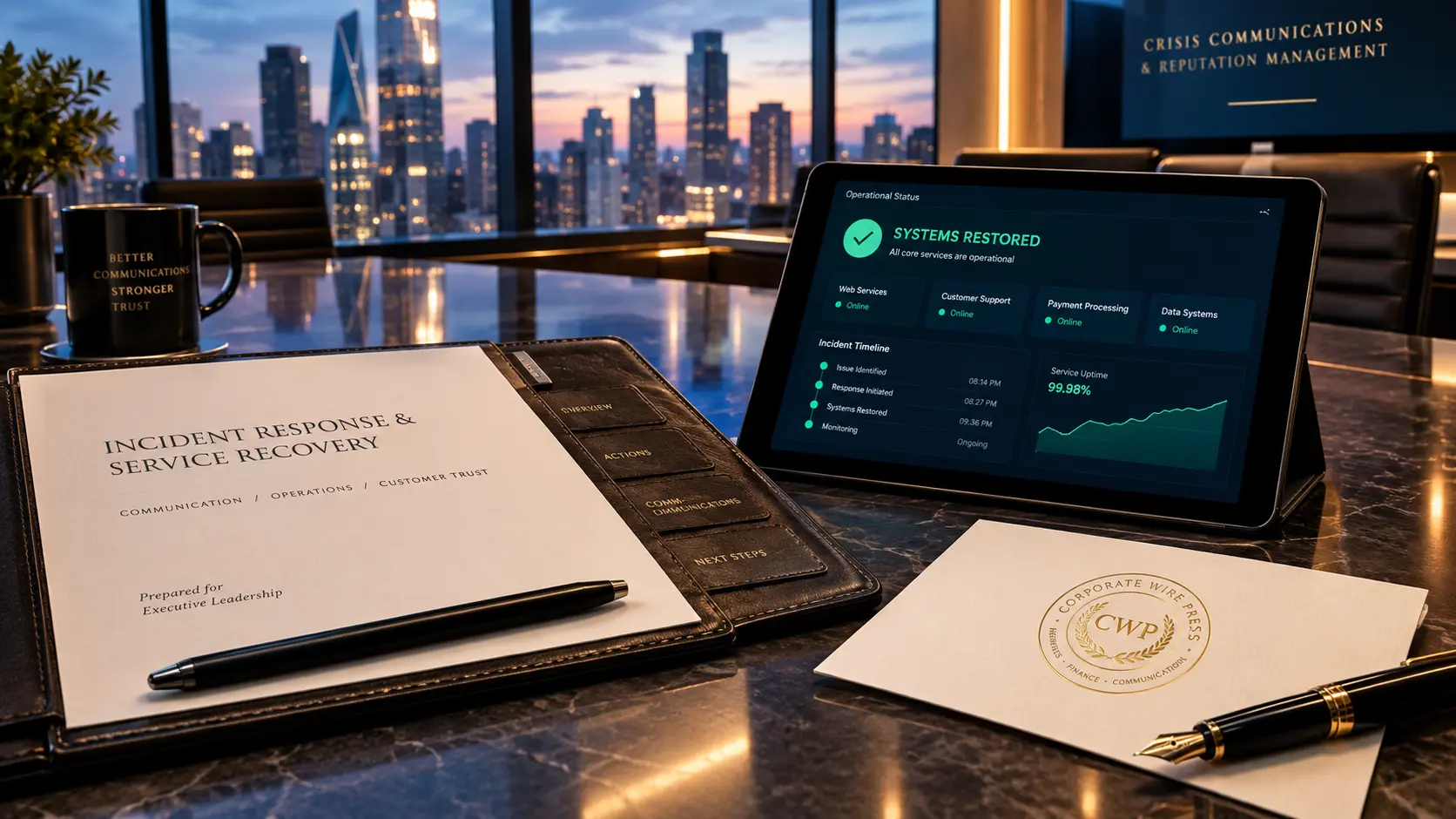
- “We regret for the inconvenience caused” is grammatically incorrect; because “regret” is a transitive verb, it takes a direct object without the preposition “for” (correct: “We regret the inconvenience caused”).
- Conversely, the verb “apologize” requires a preposition when introducing the reason (correct: “We apologize for the inconvenience”). Conflating the two structures produces the common grammatical error.
- Passive institutional phrasing like “the inconvenience caused” psychologically distances the company from the failure, often escalating customer frustration during high-impact outages or billing errors.
- Modern executive correspondence replaces defensive corporate boilerplate with the Hear-Empathize-Solve framework: acknowledge impact, validate customer emotion, and declare corrective accountability.
- High-severity service failures demand active-voice ownership and restitution rather than passive sorrow, transforming operational disruptions into long-term customer loyalty.
Linguistic Meaning and Communicative Function of the Phrase
The phrase "we regret the inconvenience caused" is one of the most ubiquitous fixtures in modern commercial correspondence. Found in automated airline delay notices, banking system error banners, and customer service ticket resolutions, it functions as an institutional expression of remorse. Semantically, the expression attempts to perform two distinct communication tasks: acknowledging that a disruption has occurred in the customer's expected service delivery, and officially registering organizational sorrow regarding that negative experience.
In sociolinguistics, this construction belongs to the category of formulaic bureaucratic politeness. Organizations deploy standardized scripts during operational disruptions to mitigate legal liability while signaling basic awareness of customer friction. By describing an operational breakdown as an "inconvenience," the company attempts to frame the failure as a minor, transient detour rather than a catastrophic breach of contract or competence.
However, the communicative efficacy of the phrase has degraded severely over decades of misuse. When a customer suffers severe material loss—such as a canceled flight before an international summit, a payroll processing freeze, or an erroneous six-figure bank levy—labeling their ordeal an "inconvenience" sounds callous and evasive. Understanding how to deploy this phrase requires mastering both its strict grammatical mechanics and its subtle psychological impact on aggrieved clients.
Grammar Correction: Why "We Regret the Inconvenience Caused" Is Correct (Dropping "For")
One of the most persistent grammatical errors across global customer support and corporate correspondence is the insertion of the preposition "for," creating the hybrid phrase: "We regret for the inconvenience caused." Search engines record tens of thousands of monthly queries from business professionals questioning whether this phrasing is standard English. The verdict from descriptive and prescriptive linguistics is definitive: inserting "for" after "regret" in this context is grammatically incorrect.
To understand why "regret for" violates English syntax, one must analyze the transitivity of the verb "regret." In standard English, the verb "regret" is primarily transitive when expressing sorrow over an external circumstance or action. A transitive verb requires a direct object to complete its meaning, without an intervening preposition. You regret something directly. You regret an error, you regret a decision, and you regret the inconvenience caused. Inserting "for" breaks the verb-object relationship, creating a redundant prepositional phrase where a direct noun phrase is required.
The origin of this pervasive error stems from syntactic confusion with the verb "apologize." Unlike "regret," the verb "apologize" is intransitive when introducing the cause of the remorse. Consequently, "apologize" requires a preposition—specifically "for"—to link to the noun phrase (e.g., "We apologize for the delay"). Writers often unconsciously blend the two distinct syntactic constructions, producing an ungrammatical chimera: "We regret for the inconvenience."
Syntax Comparison: Regret vs. Apologize vs. Pardon
To ensure impeccable syntactic precision across all enterprise correspondence, support agents and executive communicators should review the governing prepositional rules across standard English apology verbs. The following comparative taxonomy details the proper grammatical structures, common errors, and structural mechanics.
| Verb Formulation | Grammatical Status | Transitivity Type | Structural Rule & Example |
|---|---|---|---|
| We regret the inconvenience | Standard / Correct | Transitive Verb | Takes direct object without preposition: "We regret the delay." |
| We regret for the inconvenience | Non-Standard / Incorrect | Syntactic Blending Error | Redundant preposition; "for" must be dropped. |
| We apologize for the inconvenience | Standard / Correct | Intransitive + Preposition | Requires preposition "for" before the cause: "We apologize for the error." |
| We apologize the inconvenience | Non-Standard / Incorrect | Missing Preposition Error | Intransitive verbs cannot govern direct objects without a preposition. |
| Please accept our apologies for... | Standard / Correct | Nominalized Formulation | Noun phrase "our apologies" paired with prepositional complement "for". |
| We beg your pardon for... | Formal / Archaic | Idiomatic Transitive | Governs indirect/direct objects; best reserved for diplomatic or high-formality contexts. |
The Psychological Framework of an Effective Business Apology (Hear, Empathize, Solve)
When an operational breakdown occurs, customers experience a psychological shock called an "expectation breach." Whether a software bug deletes a presentation or a freight carrier delivers critical components three days late, the customer experiences immediate stress, temporal loss, and cognitive frustration. In this heightened emotional state, sterile corporate jargon triggers acute defensiveness. If an organization responds with a cold, canned sentence like "we regret the inconvenience caused," the customer perceives that their real pain has been dismissed as a routine ledger discrepancy.
To restore trust and transform an operational disruption into long-term client retention, communications must adhere to an empirical psychological framework: the Hear-Empathize-Solve (HES) architecture. Developed from organizational psychology and customer loyalty research, this three-stage methodology replaces defensive platitudes with therapeutic accountability.
Deconstructing the 3-Stage HES Framework
Stage 1: Hear (Active Cognitive Reflection). Before offering solutions or apologies, explicitly demonstrate that you have heard and cataloged the exact real-world impact of the failure. Do not say "we understand your issue"; state the issue with clinical precision. For instance: "I see that our platform's database timeout interrupted your end-of-quarter payroll run for 450 employees on Friday afternoon." Naming the specific collateral damage proves you are not hiding behind generic support macros.
Stage 2: Empathize (Validation Without Defensiveness). Validate the customer's emotional and operational distress without inserting defensive corporate caveats ("our upstream vendor experienced an unprecedented outage..."). The customer does not care about your internal vendor contracts; they care about their disrupted operations. Write: "I recognize how alarming and disruptive this delay is for your HR team and your workforce, especially during a high-stakes holiday weekend."
Stage 3: Solve (Corrective Ownership and Restitution). Conclude by declaring unambiguous ownership and immediate remediation. Detail the concrete steps already executed to resolve the root cause, establish a transparent timeline for complete restoration, and propose fair restitution (such as billing credits, priority processing, or SLA penalty reimbursements). True apologies are validated by action, not adjectives.
Avoiding Passive Corporate Excuses: Active Ownership vs. Deflection
The grammatical structure of "we regret the inconvenience caused" contains a subtle rhetorical trap: the passive participial modifier "caused." By failing to specify who caused the inconvenience, the phrase quietly detaches the company from the fault. It subtly implies that the inconvenience materialized out of thin air, like bad weather, rather than as a consequence of the company's failed code, missed logistics deadline, or billing misconfiguration.
Passive corporate language generates intense skepticism among sophisticated business clients. Modern B2B partners and informed consumers immediately recognize passive hedging as an attempt by corporate legal and PR teams to dodge accountability. When an enterprise leadership team refuses to say "the error we made," they signal that their primary objective is organizational self-protection rather than client stewardship.
High-performing executive communicators replace passive deflection with active-voice ownership. Instead of stating "regret the inconvenience caused," they declare: "We made a mistake in our inventory allocation, and we take full responsibility for the disruption this caused your store opening." Active ownership disarms anger, establishes authentic leadership integrity, and refocuses all stakeholder energy on corrective forward motion.
| Passive Deflection (Avoid) | Active Ownership (Adopt) | Relational Impact |
|---|---|---|
| We regret the inconvenience caused. | We sincerely apologize for our system outage and the disruption it caused your team. | Replaces passive hedging with explicit fault acceptance and empathy. |
| Due to unforeseen circumstances, delays may occur. | We fell behind our standard delivery schedule today. Here is what we are doing to expedite your shipment. | Averages personal ownership over vague external fate. |
| An error has been made on your billing ledger. | Our billing department miscalculated your monthly seat license fees. We have already reversed the charge. | Identifies internal source and confirms immediate resolution. |
| We hope this did not cause too much trouble. | We know this interrupted your critical quarterly close, and we deeply appreciate your patience while we remediate. | Validates actual operational pain instead of trivializing it. |
Ready-to-Use Customer Support Templates for Delays, Billing Errors, and System Downtime
Adapting your apology to the specific operational failure ensures genuine resonance and disarms conflict. Below are four production-ready, peer-reviewed executive scripts calibrated for the most common high-friction commercial scenarios: logistics delays, billing errors, enterprise cloud downtime, and high-stakes executive escalations.
Template 1: Physical Shipment & Logistics Delivery Delays
When critical supplies, physical merchandise, or event collateral fail to arrive on schedule, clients face immediate operational bottlenecks. The following script validates their schedule pressures, provides live tracking visibility, and proactively refunds fulfillment fees.
Production Script: "Dear [Client Name], I am writing to personally notify you that your shipment of [Product/Order Number], originally scheduled for delivery on [Date], has been delayed and is now arriving on [New Date]. While we strive for flawless fulfillment, our distribution hub encountered a sorting failure yesterday, and we take full responsibility for this delay. I know your team was counting on these materials for your [Project/Event Name], and I sincerely apologize for the disruption this creates for your schedule. To make this right, we have upgraded your parcel to priority courier delivery at our expense and credited your account for all shipping fees. You can monitor the real-time courier dispatch here: [Tracking Link]. Thank you for your partnership, and please reach out directly if you need alternative arrangements."
Template 2: Erroneous Charges & Invoicing Discrepancies
Billing errors provoke immediate financial anxiety and erode institutional trust faster than nearly any other mistake. When financial ledgers contain miscalculations, the response must confirm immediate financial remediation before explaining the cause.
Production Script: "Dear [Client Name], Thank you for alerting us to the discrepancy on invoice #[Number]. You are entirely correct: our billing system incorrectly applied an enterprise seat surcharge of $[Amount] that should not have been charged. I sincerely apologize for this error and for any administrative hassle it caused your finance department. We have immediately voided that charge and processed a full refund of $[Amount] back to your original payment method, which will settle within 1–2 business days. Enclosed is your corrected ledger statement showing a clean zero balance. To prevent recurrence, our accounting team has audited your contract tier in our ERP system. We deeply appreciate your vigilance and your continued business."
Template 3: Critical Cloud Software & Infrastructure Downtime
In SaaS and cloud computing, downtime halts customer productivity and threatens SLA compliance. An effective incident response email pairs transparent engineering root-cause analysis with concrete contractual credits.
Production Script: "Dear [Client Name], As you experienced earlier today, [Platform Name] suffered an unexpected service interruption between 10:15 AM and 11:45 AM EST, during which access to the core analytics dashboard was unavailable. We have fully restored all services, and your data remains completely secure and uncorrupted. We know that your daily business operations rely on uninterrupted access to our infrastructure, and we sincerely apologize for the downtime and operational friction this caused your organization. The disruption was triggered by a memory leak during our morning database replication cycle. Our infrastructure engineers have deployed a permanent patch to prevent recurrence. In accordance with our SLA commitment, our team will automatically apply a 10% credit to your upcoming monthly billing statement. A detailed post-mortem report will be published on our Trust Center by [Date]. Thank you for your patience and collaborative trust."
Template 4: Executive Escalation for Strategic Enterprise Accounts
When an issue escalates to the C-suite or VP level, standard customer support scripts are wholly inadequate. Senior executives require direct, peer-to-peer accountability, personal ownership, and private briefing channels.
Production Script: "Dear [Executive Name], I am writing to you directly regarding the recurring performance degradations your team experienced with our enterprise integration over the past two weeks. The level of service you received fell far short of the standards we committed to when establishing our partnership, and I take personal accountability for the frustration and resource strain this has placed on your leadership team. I sincerely apologize for this breakdown in our operational execution. Over the weekend, I convened our Chief Technology Officer and Lead Systems Architects to overhaul our deployment pipeline for your dedicated tenant. We have assigned a dedicated senior reliability engineer to monitor your environment 24/7. I would welcome fifteen minutes on your calendar tomorrow to brief you personally on our corrective remediation plan and hear your perspective directly. Thank you for your continued partnership and candor."
The Formality Spectrum: Choosing the Right Phrasing by Context
Every business apology exists along a delicate spectrum of formality, intimacy, and legal caution. While a catastrophic cloud outage warrants somber institutional gravity, a minor delay in sending a slide deck to a close internal peer calls for warmth, brevity, and human approachability. Selecting the wrong register can make you sound absurdly robotic to a friend or dangerously careless to an enterprise audit committee.
The following decision matrix provides calibrated alternatives to "we regret the inconvenience caused," organized across four standard professional registers.
| Formality Register | Recommended Phrasing | Optimal Scenario | Tone Impression |
|---|---|---|---|
| Executive Institutional | We sincerely apologize for this disruption to your operations. | Major platform outages, formal breach notifications, regulatory filings | Authoritative, legally compliant, deeply accountable |
| Professional Client Standard | I apologize for the delay and appreciate your patience. | Mid-tier client updates, contract revisions, missed meeting times | Balanced, polite, professional, emotionally measured |
| Warm Collaborative / Account Lead | I am truly sorry for the mix-up and the extra work this created for you. | Established clients, dedicated agency retainers, direct Slack pings | Empathetic, human, relational, service-oriented |
| Agile Shorthand / Peer | Sorry for the hold-up—thank you for your patience while we sorted this out. | Internal team channels, daily standup coordination, quick hand-offs | Brisk, transparent, collegial, action-focused |
Frequently Asked Questions: Business Apologies & Etiquette
Q: Is it ever acceptable to use "we regret the inconvenience caused"? A: Yes, but primarily in low-stakes, broadcast announcements where the organization is not at personal fault and where individual impact is minor (for example: routine scheduled facility maintenance, highway lane closures, or public transit track inspections). In 1-on-1 customer service or critical business disruptions, replace it with active, personal ownership.
Q: What is the grammatical difference between "regret" and "apologize"? A: "Regret" is a transitive verb that expresses sorrow or distress over an occurrence and takes a direct object without prepositions ("We regret the delay"). "Apologize" is an intransitive verb that acknowledges fault or asks for pardon and requires the preposition "for" before the cause ("We apologize for the delay"). Never write "we regret for the inconvenience."
Q: Should you apologize if the customer was partially responsible for the error? A: Avoid defensive arguments over fault. Instead, acknowledge the shared frustration and focus on rapid joint problem-solving: "I understand how confusing this setup step was, and I apologize for any friction in our documentation. Let us work together right now to get your system fully configured."
Q: Does apologizing expose a company to legal liability? A: In many common-law jurisdictions (including over 30 US states and various international territories), statutory "Apology Acts" protect benevolent expressions of sympathy, sorrow, and regret from being admitted as evidence of legal liability in civil proceedings. However, in major product safety, medical, or contractual breach events, corporate counsel should review formal incident communications before broadcast.
Sarah Jenkins is a seasoned corporate speechwriter and organizational communications strategist with 15 years of experience counseling enterprise executives, board directors, and senior leaders on high-stakes rhetoric.
Further Recommended Readings from Our Desks
Swiss FADP vs. EU GDPR: Core Legal Differences, Principles & Requirements Explained
A foundational legal analysis examining the core philosophical doctrines, statutory principles, consent standards, and governance requirements that distinguish Swiss data protection law from the EU GDPR.
Swiss-US Data Privacy Framework vs. EU GDPR: Cross-Border Data Transfers for AI Systems
A technical and regulatory analysis of transatlantic data transfers for artificial intelligence platforms, comparing the Swiss-U.S. Data Privacy Framework with EU GDPR transfer mechanisms, Standard Contractual Clauses, and sovereign cloud infrastructure.
Implications of Swiss Privacy Law & GDPR for AI Companies: Strategy, Risks & Market Access
Strategic analysis for machine learning executives, venture-backed AI labs, and enterprise SaaS providers evaluating jurisdictional advantages, cross-border liabilities, and European market expansion.