
100 Day Dream Home Lawsuit: Legal Claims, Construction Contract Disputes & Case Details
An In-Depth Legal Analysis of Reality Television Construction Litigation, Accelerated Building Timelines, Breach of Contract Allegations, and Contractor Liability

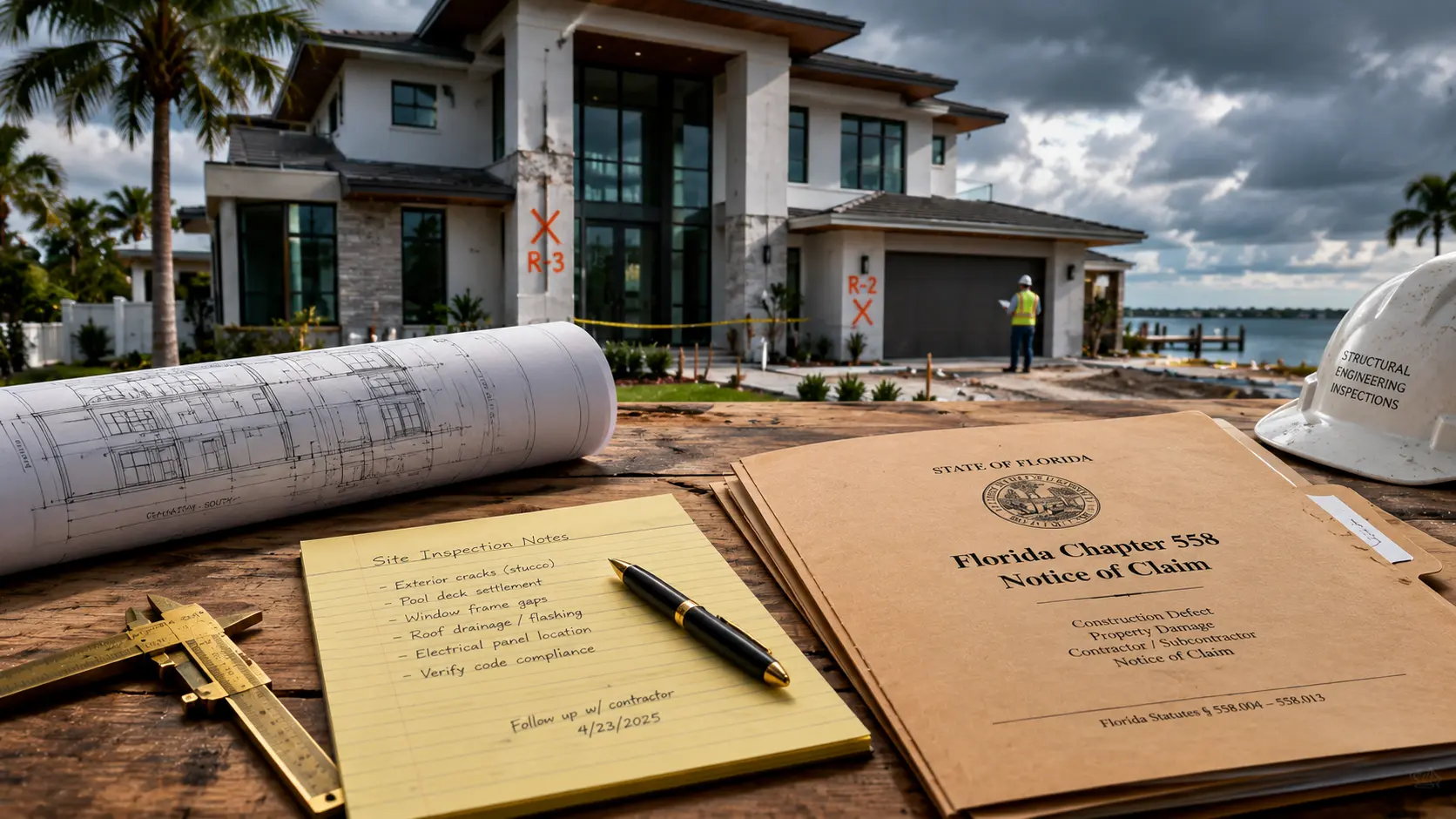
- The litigation connected to HGTV’s "100 Day Dream Home" highlights the severe legal tension between compressed television production schedules and standard residential building science.
- Homeowner complaints typically allege multiple causes of action: breach of contract, breach of the implied warranty of habitability, negligent construction, and violations of the Florida Deceptive and Unfair Trade Practices Act (FDUTPA).
- Under Florida law, construction defect disputes are governed by Chapter 558 of the Florida Statutes, which imposes a mandatory pre-suit notice and right-to-cure process before a homeowner can initiate formal court litigation.
- Reality television networks (such as Warner Bros. Discovery / HGTV) and on-screen talent (Brian and Mika Kleinschmidt) routinely insulate themselves through multi-layered legal entities, disclaimers, and separate independent contractor agreements, leaving the licensed General Contractor (GC) as the primary target of defect liability.
- For residential property owners and builders, the case underscores the critical importance of independent third-party inspections, clear change-order documentation, and understanding the risks of artificially accelerated construction timelines.
Executive Summary: The Collision of Reality Television Deadlines and Construction Contract Law
For television audiences across the United States and globally, HGTV’s hit franchise "100 Day Dream Home" represents a triumph of modern project management and design ingenuity. Hosted by husband-and-wife duo Brian and Mika Kleinschmidt, the program promises custom, ground-up residential builds designed, permitted, constructed, and furnished in a blistering 100 days or fewer—a feat rarely attempted in standard custom homebuilding, where custom residential construction routinely spans nine to eighteen months.
However, when construction timelines are compressed to satisfy episodic production schedules, broadcast air dates, and entertainment drama, building science and legal diligence frequently collide. In recent years, public reports, administrative disputes, and civil litigation surrounding custom builds featured on reality renovation programming—including legal challenges connected to "100 Day Dream Home" builds in Florida—have brought intense scrutiny to the legal relationships that govern television home construction.
When homeowners allege that their rapidly constructed dream homes suffer from foundation cracks, water intrusion, defective grading, unpermitted structural work, or electrical code violations, the legal battlefield is governed not by television network marketing, but by state construction defect statutes, warranty covenants, and complex liability allocation clauses.
This comprehensive legal analysis examines the statutory causes of action, Florida Chapter 558 pre-suit requirements, deceptive trade practice allegations, and contractual liability shields that define reality television construction litigation.
Background: The Premise of "100 Day Dream Home" & The Contracting Entities
To understand the legal mechanics of reality television construction lawsuits, one must first dismantle the corporate and operational structure of how these projects are legally organized and executed.
1. The Three-Party Operational Ecosystem
In reality home renovation programming, projects do not operate under a simple bilateral contract between a homeowner and an on-screen host. Rather, they function within a tri-partite legal structure:
2. The 100-Day Acceleration Dilemma
Under standard Florida building practices, pouring a concrete slab foundation requires a minimum curing window (typically 28 days to achieve full compressive strength) before substantial vertical structural loads are applied. Similarly, interior drywall joint compounds, stucco exteriors, and moisture barriers require strict environmental drying windows before sealing, particularly in humid subtropical climates like the Tampa Bay / Central Florida corridor where "100 Day Dream Home" primarily films.
Compressing an entire custom build—from foundation excavation to final certificate of occupancy—into 100 calendar days requires parallel trade stacking (e.g., electricians, drywallers, and painters working simultaneously in cramped quarters) and accelerated curing schedules. When weather delays (tropical storms or summer rains) occur, the lost time is often made up through overtime or accelerated finishing, which homeowners frequently allege leads to systemic latent construction defects.
The Legal Allegations: Detailed Breakdown of Homeowner Defect Claims
In civil litigation and formal legal demands filed by homeowners against reality renovation builders, complaints typically assert a predictable pattern of statutory and common law causes of action.
1. Construction Defect Claims: Structural, Grading & Water Intrusion
The core of any residential building dispute centers on physical defects. In accelerated reality builds, common allegations include:
2. Breach of Contract & Implied Warranty of Habitability
Every residential construction contract contains express terms regarding building specifications, architectural drawings, and material standards. When a builder substitutes lower-grade materials to meet television deadlines or fails to complete punch-list items, the homeowner asserts Breach of Contract.
Furthermore, under Florida common law, every sale of a newly constructed residential home carries an Implied Warranty of Habitability and Fitness for a Particular Purpose (Gable v. Silver, 258 So. 2d 11). This warranty guarantees that the home is structurally sound, free of latent defects that render it unlivable, and built in compliance with prevailing trade standards. Builders cannot simply disclaim this common law warranty through boilerplate contract clauses if the defects threaten structural integrity or resident health.
3. Florida Deceptive and Unfair Trade Practices Act (FDUTPA) Claims
In Florida construction litigation, plaintiff attorneys frequently plead claims under the Florida Deceptive and Unfair Trade Practices Act (FDUTPA, Fla. Stat. §§ 501.201–501.213).
FDUTPA prohibits unfair methods of competition, unconscionable acts or practices, and unfair or deceptive acts or practices in the conduct of any trade or commerce. In the context of a televised 100-day build, homeowners argue that marketing a home as a "luxury custom dream home built without compromise" while knowing that critical building steps were skipped or concealed behind finished drywall constitutes a deceptive commercial practice.
The strategic advantage of pleading a FDUTPA claim is immense: under Florida Statute § 501.2105, the prevailing party in a FDUTPA action is statutorily entitled to recover reasonable attorney’s fees and court costs from the defendant—a potent financial weapon that shifts leverage away from well-funded commercial builders.
The Florida Construction Defect Statutory Process: Chapter 558 Notice of Claim
A critical legal procedural hurdle that distinguishes Florida construction litigation from standard commercial breach of contract lawsuits is Chapter 558 of the Florida Statutes.
Enacted by the Florida Legislature to reduce court congestion and promote alternative dispute resolution, Chapter 558 establishes a mandatory pre-suit notice and right-to-cure procedure that every property owner must complete before filing a construction defect lawsuit against a contractor, subcontractor, supplier, or design professional.
The Chapter 558 Procedural Roadmap:
1. Notice of Claim (Fla. Stat. § 558.004(1)): At least 60 days before filing an action (or 120 days for associations representing more than 20 parcels), the homeowner must serve a written Notice of Claim on the general contractor. The notice must describe the nature and location of each alleged defect with reasonable detail;
2. Inspection Rights (§ 558.004(2)): Within 30 days of receiving the notice, the contractor is entitled to perform a reasonable inspection of the property, including non-destructive testing and destructive testing upon written notice;
3. Subcontractor Pass-Through (§ 558.004(3)): Within 10 days of receiving the notice, the general contractor must forward the claim to all potentially responsible subcontractors (e.g., the roofing, stucco, or framing sub);
4. Contractor’s Written Response (§ 558.004(5)): Within 45 days of service, the contractor must deliver a written response offering to repair the defects at no cost, offer a monetary settlement, combine repairs and cash, or dispute the claim entirely.
If the contractor disputes the claim, fails to respond, or offers an inadequate remedy, the homeowner has satisfied statutory pre-suit requirements and may formally file a civil complaint in Florida circuit court.
The Reality TV Legal Shield: Separation of Networks, Talent, and General Contractors
When unhappy homeowners seek legal redress, their immediate public instinct is to sue HGTV, Warner Bros. Discovery, or hosts Brian and Mika Kleinschmidt. In the courtroom, however, plaintiff attorneys encounter a sophisticated network of corporate liability shields designed by seasoned media entertainment defense counsel.
Key Legal Insulation Layers:
• The Independent Contractor Barrier: Television networks do not act as licensed general contractors. Their contracts explicitly characterize the construction builder as an independent contractor. Under standard tort and contract doctrine, a television network is not vicariously liable for the negligent construction acts of an independent contractor unless the network exercised direct, hands-on operational control over the physical building methods;
• Comprehensive Media Disclaimers: Homeowners signing appearance agreements execute exhaustive liability waivers that release the network and its producers from any claims arising out of structural damage, construction defects, or personal inconvenience;
• Licensing Realities: Brian and Mika Kleinschmidt are celebrated on-screen designers and licensed real estate professionals, but the legal responsibility for code compliance and structural integrity resides with the certified qualifying agent of the licensed general contracting company that pulled the building permits with the local county building department.
Consequently, while the celebrity hosts and network dominate public headlines, the legal litigation targets almost exclusively consist of the general contracting entity, its commercial general liability (CGL) insurance carrier, and the underlying subcontractors.
Arbitration Clauses, Confidentiality & Non-Disclosure Agreements (NDAs)
One reason the public rarely sees full-blown courtroom trials involving reality television home defects is that nearly all modern construction and television agreements contain mandatory binding arbitration clauses and strict Non-Disclosure Agreements (NDAs).
Under the Federal Arbitration Act (FAA) and the Florida Arbitration Code (Fla. Stat. Chapter 682), courts routinely enforce arbitration provisions in residential construction contracts. This has profound consequences for how disputes unfold:
Comparative Precedents: The Long History of Home Renovation Reality Show Litigation
The legal challenges surrounding "100 Day Dream Home" are far from isolated. They represent the latest chapter in a long history of litigation that has followed home improvement reality television since the early 2000s.
| Show / Production | Jurisdiction | Primary Legal Claims | Contractual & Legal Resolution |
|---|---|---|---|
| 100 Day Dream Home (HGTV) | Florida (Hillsborough & Pinellas County) | Construction defects, unpermitted work, FDUTPA, breach of implied warranty. | Pre-suit Chapter 558 notices, insurance settlements, and private arbitration. |
| Trading Spaces (TLC) | Various U.S. Jurisdictions | Homeowner property damage, unlivable design aesthetic, emotional distress. | Shielded by exhaustive participant liability waivers; early reality TV precedent. |
| Love It or List It (HGTV) | North Carolina (Mahany v. Big Coat TV) | Unlicensed contracting, structural floor damage, breach of contract, unfair trade practices. | Settled confidentially following court denial of production company motion to dismiss. |
| Fixer Upper (HGTV / Magnolia) | Texas (McLennan County) | Deceptive trade practices, non-disclosure of municipal crime, zoning disputes. | Addressed through local contractor indemnification and private arbitration clauses. |
| Catch a Contractor (Spike TV) | California | Contractor fraud, improper licensing, tortious interference, defamation. | Litigated under California state contractor licensing board administrative rules. |
Key Legal Takeaways for Homeowners and Commercial General Contractors
Whether you are an individual property owner embarking on a custom build or a licensed general contractor managing commercial projects, the lessons of reality TV construction litigation provide vital risk-management principles.
1. Critical Protections for Property Owners
2. Risk Mitigation for Licensed Contractors
Frequently Asked Questions: The 100 Day Dream Home Lawsuit
The following inquiries represent key public and legal questions regarding the litigation and contractual reality of "100 Day Dream Home".
1. Were Brian and Mika Kleinschmidt personally sued in court?
In construction disputes connected to television renovation shows, plaintiffs routinely name all affiliated corporate entities and on-screen talent in initial demand letters. However, formal civil liability targets the licensed General Contractor of record who pulled the municipal permits and held the master construction agreement, as networks and talent operate behind corporate liability shields and independent contractor disclaimers.
2. Can a custom residential home genuinely be built safely in 100 days?
Yes, but it requires flawless sequencing, pre-fabricated modular components, dry weather, and rapid permitting. In traditional custom building, however, compressing timelines increases the risk of trade crowding, improper moisture dissipation, and inadequate curing of foundations and exterior stucco.
3. What remedies are available under the Florida Deceptive and Unfair Trade Practices Act (FDUTPA)?
Under FDUTPA, an aggrieved homeowner who proves that a builder engaged in deceptive or unfair trade practices can recover actual damages (the cost to repair or the diminished value of the property) plus reasonable attorney’s fees and court costs pursuant to Florida Statute § 501.2105.
4. Why do most reality television construction lawsuits settle out of court?
Almost all reality television construction contracts contain mandatory private arbitration clauses and strict Non-Disclosure Agreements (NDAs). Networks and production companies prefer to fund confidential repairs or settlements through insurance carriers rather than risk public brand damage or prolonged courtroom discovery.
Marcus advises high-growth entities on jurisdictional choice, statutory corporate suffixes (Inc., Ltd., LLC), and board fiduciary responsibilities across US and UK common law regimes.
Further Recommended Readings from Our Desks
Directory of AI Service Providers in Switzerland & EU GDPR Jurisdictions: Market Landscape & Due Diligence
A Comprehensive Guide to European and Swiss Artificial Intelligence Ecosystems, Data Sovereignty Criteria, and Enterprise Procurement Due Diligence
Swiss FDPIC vs. EU GDPR Penalties: Criminal Fines Against Individuals vs. Corporate Sanctions
A Comparative Legal Analysis of Supervisory Enforcement Powers, Cantonal Criminal Prosecutions of Executives, and European Administrative Turnover Penalties
Swiss FADP vs. EU GDPR: Core Legal Differences, Principles & Requirements Explained
A foundational legal analysis examining the core philosophical doctrines, statutory principles, consent standards, and governance requirements that distinguish Swiss data protection law from the EU GDPR.