
How to Buy & Own a Home Services Business: Acquisition Guide, Valuation & Financing
The comprehensive masterclass on acquisition entrepreneurship in residential services: Seller’s Discretionary Earnings (SDE) valuation, SBA 7(a) debt structuring, Quality of Earnings (QoE) audits, and the 100-day operational blueprint.

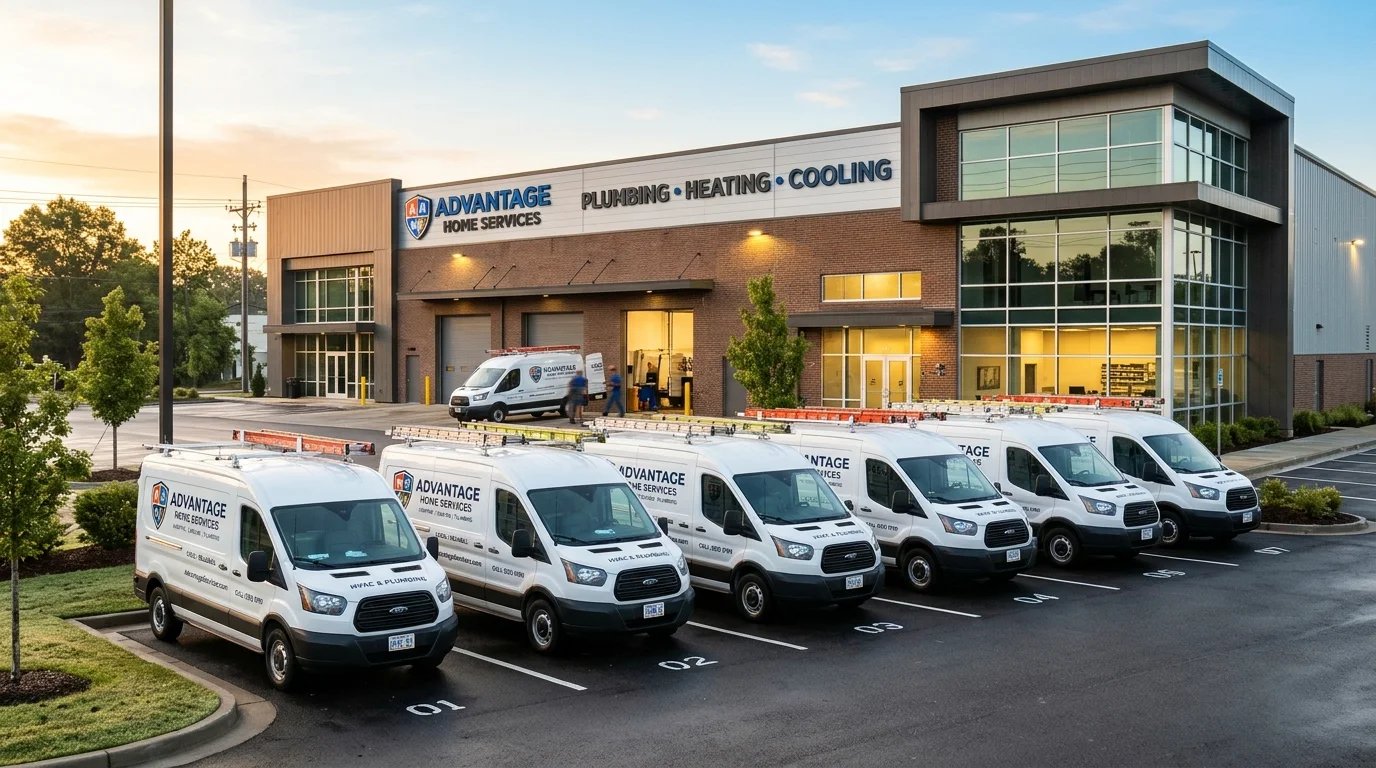
- Acquiring an existing cash-flowing home services business (HVAC, plumbing, electrical, roofing, landscaping) offers an 85%+ five-year survival rate compared to a sub-30% survival rate for startups, eliminating the painful zero-revenue phase.
- Valuation on Main Street is anchored by Seller’s Discretionary Earnings (SDE)—combining net pre-tax profit, owner salary, discretionary perks, and non-cash depreciation—typically trading at multiples of 2.2x to 3.8x SDE for businesses generating $300k to $1.5M in owner benefit.
- The Small Business Administration (SBA 7(a)) loan program represents the gold standard for financing acquisitions, enabling buyers to acquire viable businesses with as little as 10% equity cash down, paired with a 10% seller standby note and 80% bank debt amortized over 10 years.
- Rigorous financial and operational due diligence is non-negotiable: buyers must audit tax returns against bank deposits, evaluate customer concentration (<10% revenue from any single customer), assess fleet vehicle depreciation, and confirm master trade license transferability.
- The first 100 days of ownership dictate long-term success: prioritizing technician retention through competitive pay scales, modernizing legacy paper systems with cloud dispatch software (ServiceTitan, Jobber), and driving recurring maintenance club memberships.
The Silver Tsunami: Why Buying a Home Services Business Beats Starting from Scratch
Over the past decade, a quiet economic revolution has transformed American business ownership. Thousands of corporate executives, military veterans, and MBA graduates are abandoning the tech startup treadmill to pursue a more reliable path to enterprise wealth: acquisition entrepreneurship.
Rather than spending years pitching venture capitalists to build unproven software platforms with a 90% mortality rate, these savvy buyers choose to buy a home services business that already possesses verified revenue, trained field technicians, branded vans, and thousands of recurring residential customers.
At the heart of this generational opportunity is the so-called "Silver Tsunami." Over 40% of small trade businesses in North America are owned by Baby Boomers born between 1946 and 1964. Millions of successful plumbing contractors, HVAC installers, commercial electricians, and roofing operators are reaching retirement age without a family succession plan. Many are eager to transition their life’s work to an energetic, capable successor.
Furthermore, residential home services represent the ultimate recession-resilient asset class. If a family’s furnace shuts down in mid-January during sub-zero blizzards, or if a sewer main ruptures under the basement floor, that homeowner cannot defer the expense or substitute it with an AI chatbot. Essential residential maintenance is localized, non-discretionary, and non-offshorable. When you own a home services business, you control an indispensable piece of your community’s physical infrastructure.
Sector Selection: Comparing High-Margin Trade Verticals
Not all trade businesses are created equal. Different home service sectors feature drastically different capital intensity, margin profiles, customer lifetime values, and regulatory licensing thresholds:
1. Heating, Ventilation & Air Conditioning (HVAC)
Widely regarded as the crown jewel of residential services. HVAC combines high-ticket emergency replacement sales ($8,000 to $18,000 per system) with high-margin recurring maintenance agreements (semi-annual tune-ups). Gross margins regularly reach 45% to 55%, with net owner earnings between 15% and 22%.
2. Plumbing & Drain Cleaning
Plumbing boasts the highest pricing inelasticity of any trade; an overflowing toilet or burst pipe command immediate emergency service rates. Sewer line camera inspections, hydro-jetting, and trenchless pipe relining deliver exceptional margins exceeding 60% on specialized equipment jobs.
3. Residential Electrical & Smart Home Automation
With the rapid electrification of American households—including residential EV charger installations, 200-amp main panel upgrades, heat pump conversions, and home backup generators—residential electrical demand is projected to outpace licensed labor supply for decades.
4. Roofing, Siding & Exterior Restoration
Extremely high average order value ($10,000 to $30,000+ per replacement job), frequently insulated by insurance claim reimbursements following storm events. However, roofing involves lower recurring revenue and higher weather-dependent seasonality than mechanical trades.
5. Pest Control & Lawn Care (Route-Based Services)
While average transaction values are smaller ($50 to $150 per visit), route-based services boast predictable, subscription-like recurring monthly revenue. Customer retention rates often exceed 85% annually, yielding high cash-flow predictability that lenders adore.
Modern trade operators also leverage digital lead aggregators and online contractor platforms, carefully weighing customer acquisition costs against proprietary direct brand equity, as analyzed in our strategic breakdown on how to choose the right marketplace and platform channels for your business.
Home Services Sector Valuation, Margin & Regulatory Comparison Matrix
The table below compares five leading residential home service sectors across gross margin, capital intensity, licensing barriers, and typical valuation multiples:
| Sector Vertical | Average Ticket Size | Gross Margin % | Net Owner Margin (SDE %) | Master Trade License Barrier | Typical SDE Multiple Range |
| :--- | :--- | :--- | :--- | :--- | :--- |
| HVAC (Residential) | $1,200 – $14,000 | 48% – 58% | 16% – 24% | High (EPA Section 608 + State HVAC Master) | 2.8x – 4.2x SDE |
| Plumbing & Drain | $450 – $8,500 | 52% – 62% | 18% – 26% | Very High (State Master Plumber License) | 2.7x – 4.0x SDE |
| Residential Electrical | $600 – $6,500 | 45% – 54% | 15% – 22% | Very High (State Master Electrician) | 2.5x – 3.6x SDE |
| Roofing & Restoration | $8,000 – $25,000 | 38% – 48% | 12% – 18% | Moderate (General Contractor / Roofing Bond) | 2.0x – 3.0x SDE |
| Pest Control (Route) | $75 – $350 / mo | 60% – 72% | 20% – 28% | Moderate (State Structural Pest Applicator) | 3.2x – 4.5x SDE |
Business Valuation Methodology: Calculating Seller’s Discretionary Earnings (SDE)
One of the most dangerous traps for prospective business buyers is confusing revenue with cash flow. A home services company boasting $3 million in top-line revenue may only generate $100,000 in true profit if operational labor is poorly managed, whereas a lean $1.5 million operator might throw off $450,000 in owner benefit.
Exercising rigorous financial discipline and calculating true unit economics when evaluating cash-flow assets mirrors the budgeting principles explored in our guide on cost management and high-yield financial planning.
What Is Seller’s Discretionary Earnings (SDE)?
For businesses generating under $2 million in annual cash flow, Main Street mergers and acquisitions operate on Seller’s Discretionary Earnings (SDE). SDE quantifies the total financial benefit a single, full-time owner-operator extracts from the enterprise in a given fiscal year.
The SDE Recast Formula
To calculate true SDE, start with Net Pre-Tax Income from the company’s IRS Form 1120-S or Schedule C and apply verified add-backs:
1. Reported Pre-Tax Net Income: Baseline net profit reported on tax returns.
2. Owner’s Salary & Payroll Taxes: Total W-2 compensation paid to the primary owner-operator.
3. Discretionary & Personal Expenses: Legitimate non-business perks run through the business (owner’s personal vehicle lease, personal fuel cards, family cell phone plans, country club memberships, and personal health insurance).
4. Non-Cash Depreciation & Amortization: Paper accounting write-offs for fleet vans and heavy equipment.
5. One-Time Non-Recurring Expenses: Extraordinary costs that will not recur under new ownership (e.g., an exceptional $25,000 legal settlement or a major building roof repair).
6. Interest Expense: Capital debt service paid by the current owner, which disappears when existing liabilities are cleared at closing.
Market Multiple Benchmarks
Once the 3-year weighted average SDE is established, market multiples are applied:
• Sub-$300k SDE: Trades at 1.8x to 2.5x SDE (often essentially buying a high-paying technician job with tools).
• $300k to $750k SDE: Trades at 2.5x to 3.2x SDE (possesses an office dispatcher, lead technicians, and stable fleet).
• $750k to $1.5M SDE: Trades at 3.2x to 4.0x SDE (fully institutionalized company with middle management, estimators, and branding).
• $1.5M+ SDE / EBITDA: Trades at 4.5x to 7.0x+ EBITDA as regional private equity rollups compete aggressively for platform acquisitions.
Financing Architecture: Leveraging SBA 7(a) Loans, Seller Standby Notes & Equity
The single greatest advantage of acquiring a profitable domestic business in the United States is access to government-guaranteed small business debt through the Small Business Administration (SBA 7(a)) program.
The 90/10 SBA Capital Stack
Under current SBA guidelines, an acquisition entrepreneur can purchase an existing profitable trade business with as little as 10% total equity cash injection, allowing a buyer with $100,000 in personal liquidity to purchase a $1,000,000 cash-flowing enterprise generating $350,000 in annual SDE!
A classic, bank-approved capital stack is structured as follows:
• 75% to 80% Senior SBA Bank Loan: Issued by a preferred SBA lending institution (guaranteed up to 75% by the US federal government). Amortized over a favorable 10-year term with prime-floating interest rates and zero balloon payment risks.
• 10% to 15% Seller Financing (Seller Note): The departing business owner carries a subordinated promissory note. If the seller note is placed on full standby (meaning zero principal or interest payments for the first 24 months), the SBA allows the seller note to count toward the buyer’s mandatory 10% equity injection!
• 5% to 10% Buyer Cash Equity: The buyer’s personal funds, sourced from personal savings, home equity lines of credit (HELOC), or tax-free 401(k) Rollovers for Business Startups (ROBS).
Why Seller Financing Is Non-Negotiable
Never acquire a private home services business without seller financing. A seller who carries a 15% note maintains personal financial skin in the game. If key technicians threaten to quit, if legacy customers call with complaints, or if licensing transition issues arise during the first year, the seller is financially incentivized to pick up the phone, intervene, and ensure the buyer’s ongoing operational success.
The Due Diligence Audit: Financial Reconciliation, Licensing & Concentration Risks
Signing a Letter of Intent (LOI) is only the beginning. The subsequent 60-to-90-day due diligence window is where you uncover the hidden landmines that could turn an apparent goldmine into a financial catastrophe.
1. Proof of Cash: Tax Returns vs. Bank Deposits
Small business owners frequently boast about "cash under the table." The golden rule of acquisition entrepreneurship is unyielding: If it did not appear on federal IRS tax returns, it does not exist.
Hire an independent CPA firm to perform a formal Quality of Earnings (QoE) report. The accountants match every dollar of claimed revenue on QuickBooks directly to monthly business bank statements and merchant processing deposits. Any discrepancy between tax filings and bank records must be immediately removed from the SDE calculation.
2. Customer Concentration Audit
Ensure that no single residential property manager, home builder, or commercial client represents more than 10% to 15% of total gross revenue. If an HVAC company generates 40% of its revenue doing low-margin duct installations for a single local home builder, losing that one contract the day after closing could bankrupt the business.
3. Master Trade License Transferability
If you are acquiring an electrical, plumbing, or HVAC business without personally holding a state Master license, you must ensure regulatory compliance:
• In many jurisdictions, the seller can remain on a 12-to-24-month consulting retainer as the "Responsible Managing Employee" (RME) or Master of Record while an internal lead technician completes their licensing exams.
• Alternatively, you can negotiate a structured employment contract and equity incentive package for your senior lead technician to serve as the qualifying license holder for the business entity.
4. Fleet and Equipment Physical Inspection
A fleet of ten contractor vans might look impressive on paper, but if six vehicles possess 220,000 miles with failing transmissions, you will be forced to spend $150,000 in emergency capital expenditures within six months of closing. Hire a certified mechanic to perform comprehensive 150-point diagnostic inspections on every service truck and expensive diagnostic tool (such as drain cameras and refrigerant recovery units).
5. UCC Lien Searches & Parts Inventory Audits
Ensure that your acquisition attorney executes comprehensive county, state, and federal Uniform Commercial Code (UCC-1) lien searches. Many trade owners finance costly pipe-threading machines, trenchers, or shop lifts through equipment lease lines. All existing liens must be cleared and satisfied by the seller at closing to ensure the buyer receives free and clear title to all assets.
Additionally, perform a physical wall-to-wall parts inventory count on the night before closing. Settle parts inventory at verifiable wholesale landed cost, strictly excluding obsolete refrigerants, unreturnable special-order fixtures, or damaged stock.
Managing replacement parts supply lines and understanding import logistics for specialized mechanical equipment is vital for inventory management, as examined in our briefing on cross-border supply chains, logistics, tariffs and global inventory sourcing.
The First 100 Days Blueprint: Technician Retention, Software & Pricing Optimization
Closing the acquisition deal is the starting line. Your execution over the initial 100 days dictates whether the business thrives or suffers painful operational attrition:
Days 1 – 30: Cultural Stability & Retaining the Field Crew
Technicians are terrified that a new corporate owner will slash wages, cut benefits, or install punitive tracking metrics. Your sole objective in Month 1 is calm reassurance and listening:
• Conduct private 1-on-1 interviews with every technician, dispatcher, and helper. Ask three questions: What tools or parts do you constantly lack? What customer complaint do you hear repeatedly? What is one thing we could fix tomorrow to make your job easier?
• Deliver on low-cost quick wins immediately (e.g., buying new cordless power tools or fixing broken van air conditioners). This cements trust and prevents rival contractors from poaching your top technicians.
Days 31 – 60: Modernizing Dispatch Software (Field Service Management)
Many legacy owners operate on paper clipboards, whiteboards, or outdated desktop software. Migrating to modern cloud-based Field Service Management (FSM) platforms—such as ServiceTitan, Jobber, or Housecall Pro—unlocks massive efficiency:
• Automated GPS Dispatching: Minimizes technician windshield drive time by grouping calls by geographic neighborhood clusters.
• Digital Good-Better-Best Price Books: Equips technicians with visual tablet proposals, enabling customers to choose between basic repairs, mid-tier system updates, and premium energy-efficient replacements, instantly boosting average ticket sizes by 25% to 40%.
Days 61 – 100: Launching Maintenance Club Memberships
Transform transactional one-off repair customers into recurring revenue subscribers by introducing an Annual Maintenance Club ($15 to $25/month). Members receive complimentary biannual tune-ups, 15% repair discounts, and priority queue dispatching.
Maintenance clubs smooth out shoulder-season revenue troughs and build an impenetrable customer moat, mirroring the retention strategies examined in our guide to building recurring customer engagement and thank-you correspondence.
Furthermore, optimizing technician customer service interactions and monitoring post-dispatch Net Promoter Scores drives five-star Google reviews, reflecting the principles detailed in our analysis of customer experience consulting and operational excellence.
Frequently Asked Questions
Do I need a trade license (like a Master Plumber or HVAC license) to buy a home services business?
Not necessarily. While trade work requires a licensed technician, the owner of the corporate entity does not always have to hold the license personally. Many non-technical buyers retain the departing owner as the qualifying license holder on a part-time consulting contract, or partner with a senior lead technician who holds the required master credentials.
How much money do I need to buy a home services business using an SBA 7(a) loan?
Under standard SBA 7(a) guidelines, buyers typically need 10% total equity injection. For a business purchased at $1,000,000, you would need $100,000 in cash. Furthermore, if the seller agrees to carry a 10% standby seller note, your out-of-pocket cash injection can sometimes be reduced to 5% ($50,000).
What is a typical SDE multiple for a residential trade business?
Small businesses generating between $300,000 and $750,000 in SDE typically trade at 2.5x to 3.2x SDE. Companies generating $750,000 to $1.5M in SDE trade at 3.2x to 4.0x SDE. Larger enterprises exceeding $2M in EBITDA frequently attract private equity multiples of 4.5x to 7.0x+.
What is the biggest risk when buying an existing home services company?
The primary operational risks include: 1) Loss of key technicians upon ownership transfer. 2) Unreported customer concentration (>15% revenue tied to a single contractor). 3) Undisclosed vehicle fleet or equipment repair liabilities. 4) Discrepancies between claimed tax profits and actual bank deposits.
How long does the business acquisition process take from search to closing?
The acquisition journey typically takes 6 to 12 months. This includes 3 to 6 months of active deal sourcing and evaluation, 1 to 2 months of LOI negotiation, and 60 to 90 days of formal due diligence, SBA loan underwriting, and legal contract drafting.
Sarah Jenkins is a seasoned corporate speechwriter and organizational communications strategist with 15 years of experience counseling enterprise executives, board directors, and senior leaders on high-stakes rhetoric.
Further Recommended Readings from Our Desks
Pros of a Business Partnership: 8 Big Advantages, Types & Agreement Tips
An executive masterclass on business partnerships: 8 foundational strategic advantages, legal entity structures (GP, LP, LLP, LLC), partnership agreement anatomy, and dispute-proofing protocols.
Early Education Franchise Guide: Startup Costs, Top Childcare Brands & ROI
The definitive institutional guide to early childhood education and preschool franchises: Item 7 real estate startup costs, top brand financial metrics, state regulatory ratios, and franchisee ROI.
Youth Entrepreneurship Support Programme: Grants, Mentorship & Funding for Young Founders
The ultimate guide to youth entrepreneurship support programmes: non-dilutive grant capital, top global accelerators, elite mentorship frameworks, and application strategies for founders under 30.