
Massage Envy Franchise Review: Startup Costs, Royalty Fees, Profits & Requirements
An unvarnished financial audit of the Massage Envy franchise system: Item 7 capital expenditure breakdown, recurring membership economics, therapist labor shortages, and multi-unit profitability.

- Massage Envy is the undisputed market pioneer of the recurring membership wellness model, operating over 1,100 franchised clinics across 49 states with more than 1.5 million active paying subscription members.
- According to Item 7 of the Franchise Disclosure Document (FDD), the total initial investment required to open a new Massage Envy clinic ranges from $587,350 to $1,059,000, which includes a $45,000 initial franchise fee and extensive tenant leasehold improvements.
- Mandatory financial qualification requirements stipulate a minimum personal net worth of $500,000 and at least $150,000 in unencumbered liquid capital (cash, marketable securities, non-retirement savings).
- Ongoing corporate obligations total approximately 8% to 10% of gross revenue, consisting of a 6.0% operational royalty fee, a 2.0% national marketing fund contribution, plus mandatory point-of-sale technology dues and local advertising co-op commitments.
- Unit economics deliver average gross sales (AUV) between $1.2M and $1.8M, but net operating profit (EBITDA margins of 12% to 18%) is heavily constrained by licensed massage therapist (LMT) and esthetician wage inflation and national industry talent shortages.
The Wellness Pioneer: The Rise & Business Model of Massage Envy
Prior to the founding of Massage Envy in Scottsdale, Arizona, in 2002, the American massage therapy market was heavily fragmented. Consumers seeking therapeutic bodywork had to choose between high-priced luxury day spas at destination resorts charging $200+ per hour, or solo independent massage practitioners operating out of chiropractic basements with irregular scheduling and inconsistent cleanliness.
Massage Envy revolutionized the personal wellness industry by transforming massage from an occasional, luxury indulgence into an accessible, routine health habit. The genius of the brand lay in its pioneering membership subscription model:
• Members pay a recurring monthly subscription fee (typically $75 to $95 per month, depending on the metropolitan market), which entitles them to one 60-minute customized massage, total body stretch session, or customized facial treatment each month.
• Unused treatment credits roll over month-to-month as long as the membership remains active, creating immense psychological switching costs and predictable recurring cash flow for clinic owners.
• Members enjoy discounted member-only rates for additional sessions, facial upgrades, chemical peels, and retail skincare products (featuring premier dermatological brands such as Obagi and Jan Marini).
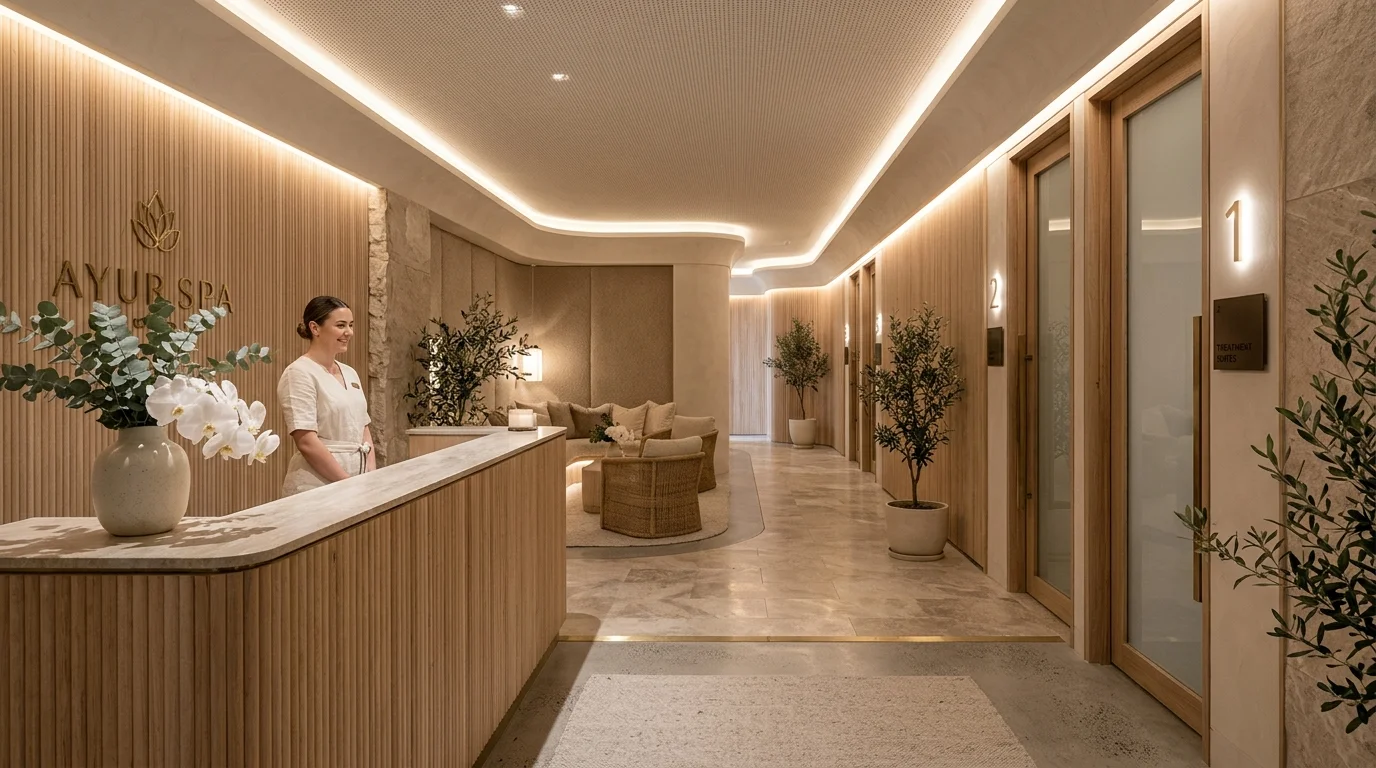
Today, as a flagship brand under private equity parent company Roark Capital Group (via Driven Brands/ME Holdco), the massage envy franchise network encompasses over 1,100 franchised locations across 49 states. However, prospective franchise buyers must look beyond the gleaming reception desks and ambient lighting to examine the unvarnished unit economics, labor bottlenecks, and operational realities governing this mature wellness franchise.
Financial Qualification & Startup Costs: Item 7 Capital Expenditure Breakdown
Launching a new Massage Envy clinic is a substantial capital commitment. Prospective franchisees must meet rigorous net worth criteria before being granted an executive Discovery Day interview.
Financial Qualification Thresholds
• Minimum Unencumbered Liquid Capital: $150,000 (verifiable in checking accounts, savings, money market funds, or non-retirement publicly traded equities).
• Minimum Personal Net Worth: $500,000 (total assets minus total liabilities).
• Multi-Unit Appetite: While single-unit agreements are occasionally granted in infill secondary markets, the corporate development team strongly favors multi-unit operators with the capital capacity to commit to 2 to 4 clinic development schedules.
Item 7 Total Initial Investment Breakdown ($587,350 to $1,059,000)
According to the official Massage Envy Franchise Disclosure Document (FDD), the capital expenditure is itemized across key categories:
• Initial Franchise Fee: $45,000 (payable in full upon signing the Franchise Agreement; discounted to $35,000 for qualified multi-unit agreements or military veterans).
• Leasehold Improvements & Architectural Buildout: $275,000 to $540,000. The largest single capital expenditure. Massage Envy clinics require 2,500 to 3,500 square feet of commercial retail space divided into 10 to 18 acoustically soundproofed treatment rooms, dual quiet relaxation lounges, ADA-compliant restrooms, staff breakrooms, and high-capacity laundry facilities with commercial-grade washers and dryers.
• Treatment Equipment, Hydraulic Tables & Ergonomic Furniture: $65,000 to $115,000. Includes motorized hydraulic massage tables, hot towel cabis, specialized facial steamers, microdermabrasion machinery, and front-desk POS workstations.
• Exterior Signage & Interior Branding Package: $18,000 to $38,000. Channel letter illuminated exterior storefront signs, dimensional lobby logos, and ambient wall coverings.
• Opening Professional Retail Inventory & Linens: $22,000 to $42,000. Back-bar massage lotions, aromatherapy oils, professional skincare back-bar inventory, and hundreds of sets of high-thread-count cotton sheets and plush towels.
• Three Months Additional Funds (Working Capital Reserve): $50,000 to $90,000. Vital working capital to fund staff payroll, merchant processing fees, and utility overhead during the initial ramp-up phase before monthly membership subscriptions cover operating expenses.
Item 7 Total Initial Investment Expenditure Matrix
The table below summarizes the low-to-high capital expenditure ranges disclosed in Item 7 of the official Massage Envy Franchise Disclosure Document:
| Expenditure Category | Low Estimated Cost | High Estimated Cost | Method of Payment | To Whom Payment Is Made |
| :--- | :--- | :--- | :--- | :--- |
| Initial Franchise Fee | $45,000 | $45,000 | Lump Sum (Wire) | Massage Envy Franchising, LLC |
| Leasehold Improvements (Buildout) | $275,000 | $540,000 | As Incurred | General Contractor / Subcontractors |
| Architectural & Engineering Fees | $16,500 | $32,000 | Progress Invoices | Approved Architectural Vendor |
| Specialized Treatment Equipment & Tables| $65,000 | $115,000 | Prior to Delivery | Approved Equipment Vendors |
| Exterior & Interior Signage | $18,000 | $38,000 | Progress Invoices | Approved Signage Fabricators |
| Computer Software, POS & Sound System | $14,000 | $28,000 | Prior to Opening | Approved Technology Vendors / ME |
| Opening Linens, Back-Bar & Retail Supplies| $22,000 | $42,000 | Prior to Opening | Authorized Supply Vendors |
| Insurance Premiums (General / Malpractice)| $4,500 | $9,500 | Annual / Semi-Annual| Third-Party Insurance Carriers |
| Travel & Training Expenses (2 Persons) | $3,500 | $7,500 | As Incurred | Airlines, Hotels, Meals |
| Grand Opening Advertising Commitment | $15,000 | $25,000 | Prior to Opening | Local Media / Digital Marketing Agencies |
| Additional Funds (3-Month Ramp Runway) | $50,000 | $90,000 | As Incurred | Employees, Utilities, Landlord |
| TOTAL ESTIMATED INITIAL INVESTMENT | $587,350 | $1,059,000 | Structured Stack | Capital Deployment Range |
Ongoing Corporate Dues: Royalty Fees, National Marketing & Software Dues
Operating under the Massage Envy trademark requires recurring weekly and monthly capital remittances to corporate headquarters:
1. The 6.0% Continuing Operational Royalty Fee
Franchisees pay an ongoing royalty of 6.0% of Gross Sales, collected weekly via automated clearing house (ACH) electronic debit. Crucially, gross sales include all membership subscription dues, non-member service charges, retail skincare purchases, and cancellation fees, minus legitimate retail sales tax remittances.
2. The 2.0% National Marketing Fund (NMF)
An additional 2.0% of Gross Sales is pooled into the National Brand Marketing Fund. These multi-million-dollar funds finance national cable television commercials, digital search marketing, social media campaigns, and brand sponsorships.
3. Local Advertising Cooperative Dues
In major metropolitan DMAs (Designated Market Areas) with multiple operational clinics, franchisees are contractually required to contribute up to an additional 2.0% of Gross Sales into a regional marketing cooperative. Co-op funds finance regional billboard campaigns, sports team sponsorships, and localized geo-targeted digital advertising.
4. Technology & System Licensing Fees
Franchisees remit approximately $1,100 to $1,600 per month to corporate for proprietary appointment booking software, cloud POS maintenance, gift card network syndication, and cybersecurity infrastructure.
Understanding how recurring corporate franchise fees impact operational cash flow is essential when comparing franchise licenses against independent business acquisitions, as explored in our guide to buying and owning an established residential trade business.
Unit Economics: Average Unit Volumes (AUV), Therapist Payroll & True Profitability
To understand the financial viability of a massage envy franchise, one must dissect the clinic-level profit and loss statement (P&L):
1. Top-Line Revenue: Average Unit Volume (AUV)
According to recent historical Item 19 disclosures, average clinic performance breaks down as follows:
• Top-Quartile Clinics: Generate between $1.8M and $2.4M+ in annual gross revenue, typically operating in affluent suburban retail centers with 1,800 to 2,500 active paying members.
• System-Wide Average (AUV): Hovers between $1.25M and $1.45M in gross revenue, driven by approximately 1,100 to 1,400 active monthly subscribers.
• Bottom-Quartile Clinics: Generate sub-$900,000, frequently struggling with low member retention or severe therapist staffing shortages.
2. The Core P&L Operating Expense Anatomy
Where does a $1.3 million revenue stream go? The reality of service retail:
• Therapist & Esthetician Direct Labor (38% to 44%): The single largest operational expense. Licensed Massage Therapists (LMTs) are paid hourly wages plus service commission bonuses ($24 to $45+ per service hour depending on the metropolitan market), payroll taxes, and workers’ compensation insurance.
• Corporate Fees (Royalties + Marketing + Tech) (9% to 11%): 6% royalty + 2% national ad + 2% local co-op + tech fees.
• Commercial Real Estate Lease & NNN (10% to 14%): Rent for 3,000 square feet in prime grocery-anchored strip centers runs $6,000 to $14,000+ per month plus triple-net (NNN) common area maintenance.
• Front Desk Sales Staff & Management (10% to 12%): Clinic manager salary ($55k–$75k) plus hourly wellness sales associates.
• Laundry, Back-Bar Supplies & Merchant Fees (5% to 7%): Credit card processing (2.5%) and linen maintenance.
3. Net Owner Cash Flow (EBITDA)
After all operating expenses are deducted, a well-run mature Massage Envy clinic typically yields 12% to 18% in EBITDA (Earnings Before Interest, Taxes, Depreciation, and Amortization). On a clinic producing $1,350,000 in gross revenue, this translates to approximately $160,000 to $240,000 in annual net operating cash flow per unit.
The Labor Bottleneck: Recruiting & Retaining Licensed Massage Therapists (LMTs)
If you interview ten current Massage Envy franchisees, nine of them will name their #1 operational headache within thirty seconds: the acute national shortage of Licensed Massage Therapists (LMTs).
The Anatomy of the Labor Shortage
Unlike fast-food or retail workers who can be trained in two days, massage therapists must complete 500 to 1,000 hours of accredited post-secondary vocational training, pass state licensing board examinations, and obtain liability malpractice insurance. The barrier to entry is high, but the physical demands of deep-tissue bodywork limit most therapists to performing a maximum of 20 to 28 hands-on hours per week before physical repetitive strain and burnout occur.
Capacity Utilization Trap
A clinic may possess 16 luxurious treatment rooms capable of generating $2.5 million in revenue, but if you only employ 12 reliable therapists, four treatment suites sit dark and empty every day. Your fixed real estate rent remains 100%, but your revenue-generating capacity is capped at 60%.
Winning franchisees differentiate themselves through exceptional labor management: offering health benefits, 401(k) matches, continuing education credit reimbursements, and ergonomic hydraulic tables to reduce therapist fatigue.
Furthermore, optimizing client communication and enhancing member rebooking loyalty requires treating hospitality as a science, reflecting the principles analyzed in our briefing on customer experience consulting, NPS optimization, and brand standards.
Competitive Landscape: Massage Envy vs. Hand & Stone vs. Elements Massage
Prospective buyers should evaluate Massage Envy alongside its primary national franchised competitors:
1. Hand & Stone Massage and Facial Spa
Massage Envy’s most formidable rival. Hand & Stone emphasizes high-margin hot stone massage modalities and intensive European skincare services, attracting a slightly older, affluent demographic.
2. Elements Massage
Focuses almost exclusively on customized therapeutic massage, eliminating complex skincare or facial back-bars to streamline clinic operations and lower equipment buildout costs.
3. The Now Massage
An emerging boutique competitor featuring chic, open-concept bohemian aesthetic styling and Instagram-worthy zen architecture targeted squarely at millennial and Gen Z urban wellness consumers.
Pros of Owning a Massage Envy Franchise:
• Massive Brand Recognition: Over 90% aided brand awareness in the therapeutic wellness category.
• Predictable Recurring Revenue: Recurring monthly membership drafts provide stable baseline cash flow on the 1st of every month.
• Corporate Support: Comprehensive real estate selection analytics, national marketing muscle, and standardized operating playbooks, mirroring the legal structures detailed in our guide to franchisor vs franchisee rights and responsibilities.
Cons and Risks to Consider:
• High Initial Capital Intensity: Up to $1M+ capital requirement per location.
• Severe Labor Dependency: Continuous pressure to recruit, train, and retain state-licensed massage therapists.
• Legacy Brand Age: Many older territories require costly mandatory 10-year store remodels to match current corporate design aesthetics.
The Resale Market: Buying an Existing Clinic vs. Ground-Up Buildout
Given that the Massage Envy network is mature and densely penetrated across prime tier-1 metropolitan markets, many incoming franchisees acquire existing operational clinics through resale rather than building from scratch:
• The Resale Advantage: Acquiring an existing unit provides immediate Day 1 revenue from an established base of 800 to 1,500 active paying subscribers, trained therapist staff, and historical tax returns that qualify for expedited SBA 7(a) acquisition financing.
• Valuation Multiples on Resales: Existing Massage Envy clinics typically trade at 3.0x to 4.5x adjusted EBITDA. For example, a clinic throwing off $200,000 in net cash flow typically trades between $600,000 and $900,000.
• Mandatory Remodel Contingency: When negotiating a resale, buyers must account for the franchisor’s mandatory transfer remodel requirements. Corporate often requires the buyer to complete a full interior cosmetic remodel ($75,000 to $150,000) within 12 months of transfer, which should be negotiated as a purchase price reduction.
Prospective investors seeking to identify available local territories should conduct deep demographic mapping, as outlined in our tactical guide on how to find and evaluate local franchise opportunities near you.
Finally, successful spa owners build loyal local member bases by instituting personalized hospitality rituals and post-session correspondence, adhering to the strategies explored in the art of writing thank you for your business notes and customer loyalty.
Frequently Asked Questions
How much does it cost to open a Massage Envy franchise in total?
According to Item 7 of the Franchise Disclosure Document (FDD), the total estimated initial investment to open a new Massage Envy clinic ranges from $587,350 to $1,059,000, which includes the $45,000 initial franchise fee, real estate buildout, equipment, and opening inventory.
What are the financial requirements to qualify for a Massage Envy franchise?
Prospective franchisees must have a minimum personal net worth of $500,000 and at least $150,000 in unencumbered liquid assets (cash, savings, non-retirement investments).
What are the ongoing royalty and marketing fees for Massage Envy?
Franchisees pay a 6.0% continuing operational royalty fee, a 2.0% National Marketing Fund contribution, up to 2.0% in regional marketing co-op dues, and approximately $1,100 to $1,600 monthly in software and technology dues.
How much profit does an average Massage Envy franchise generate annually?
Average Unit Volumes (AUV) typically range from $1.25M to $1.45M in gross annual revenue. With average EBITDA margins of 12% to 18%, a well-managed clinic generates approximately $160,000 to $240,000 in annual net operating cash flow.
What is the biggest operational challenge in running a Massage Envy clinic?
The primary operational hurdle is recruiting and retaining Licensed Massage Therapists (LMTs). Because therapists require extensive state certification and can only perform a limited number of physical massage hours per week, therapist labor availability caps clinic revenue potential.
Sarah Jenkins is a seasoned corporate speechwriter and organizational communications strategist with 15 years of experience counseling enterprise executives, board directors, and senior leaders on high-stakes rhetoric.
Further Recommended Readings from Our Desks
Pros of a Business Partnership: 8 Big Advantages, Types & Agreement Tips
An executive masterclass on business partnerships: 8 foundational strategic advantages, legal entity structures (GP, LP, LLP, LLC), partnership agreement anatomy, and dispute-proofing protocols.
Early Education Franchise Guide: Startup Costs, Top Childcare Brands & ROI
The definitive institutional guide to early childhood education and preschool franchises: Item 7 real estate startup costs, top brand financial metrics, state regulatory ratios, and franchisee ROI.
Youth Entrepreneurship Support Programme: Grants, Mentorship & Funding for Young Founders
The ultimate guide to youth entrepreneurship support programmes: non-dilutive grant capital, top global accelerators, elite mentorship frameworks, and application strategies for founders under 30.