
RSVPing: Meaning, Correct Spelling & How to Use It
Learn what "RSVPing" means, how to spell "RSVP," "RSVPed," "RSVPs," and "RSVPing" without awkward punctuation, and how to master formal invitation responses across business and social events.

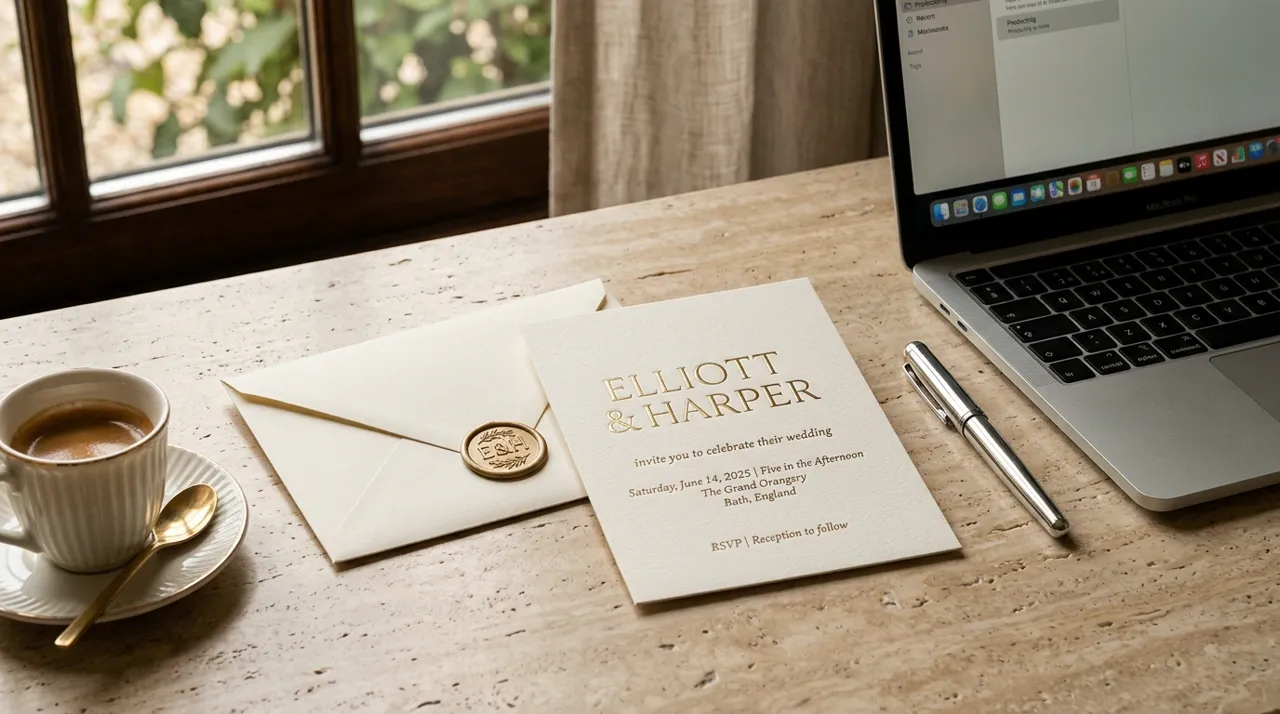
- RSVPing (spelled R-S-V-P-i-n-g, with no apostrophe) is the standard modern present participle and gerund form of the verb RSVP, meaning "in the process of replying to an invitation."
- RSVP stands for the French phrase *"Répondez s’il vous plaît", which translates literally to "Respond, if you please" (i.e., "Please reply"*).
- Under AP Stylebook and Chicago Manual of Style, conjugate the acronym cleanly without apostrophes: RSVPs (plural/third-person), RSVPed (past tense, though RSVP’d appears informally), and RSVPing (progressive/gerund).
- Saying "Please RSVP" is technically redundant ("Please respond if you please"), though it is broadly tolerated in casual speech; in formal invitations, prefer "Kindly RSVP by..." or "RSVP requested by..."
- Responding promptly—even to decline—is an essential pillar of corporate etiquette, protecting event budgets, catering headcounts, and executive goodwill.
1. What Does "RSVPing" Mean? Meaning, Etymology & French Heritage
RSVPing is the present participle and gerund form of the verb to RSVP, meaning replying to an invitation to confirm whether you will attend or decline an event. When someone says "Thank you for RSVPing ahead of Friday’s deadline" or "I’m RSVPing for two guests," they are treating the century-old initialism RSVP as an active English verb.
The French Root: Répondez s’il vous plaît
The four letters R-S-V-P originate from the polite French imperative expression *"Répondez s’il vous plaît," translating word-for-word to "Respond, if it pleases you" (or naturally in modern English, "Please reply"*). Adopted into English aristocratic stationery during the late 18th and early 19th centuries—when French served as the universal language of European diplomacy and court etiquette—the abbreviation saved engravers space at the bottom of embossed formal invitation cards.
How a French Phrase Became an English Verb
Over the twentieth century, English speakers performed a classic linguistic shift called anthimeria (converting a noun or initialism into a verb). Because English lacks a crisp single verb meaning "reply officially to confirm event attendance headcount," RSVP evolved effortlessly into a versatile action verb—generating the inflected forms RSVPs, RSVPed, and RSVPing.
2. Spelling Rules: RSVPing, RSVPed vs. RSVP’d, and Capitalization Standards
Conjugating an all-caps initialism introduces immediate visual friction for writers. Should you insert an apostrophe (RSVP’ing)? Add hyphens (RSVP-ing)? Drop the capitals (rsvping)? Leading editorial manuals provide clear consensus rules.
How Leading Style Guides Spell RSVP Inflections
| Inflection / Form | Preferred Style (Chicago / AP / Merriam-Webster) | Informal Variant (Avoid in Formal Copy) | Grammatical Function & Example |
| :--- | :--- | :--- | :--- |
| Base Form / Noun | RSVP (no periods) | R.S.V.P. (dated print style) | "Please submit your RSVP by October 15." |
| Gerund / Participle | RSVPing (no apostrophe, no hyphen) | RSVP’ing, RSVP-ing, rsvping | "Thank you for RSVPing to the annual shareholder dinner." |
| Past Tense | RSVPed (Chicago/MW) or RSVP’d (AP acceptable) | RSVPd, rsvped | "Over 140 executives RSVPed within 48 hours." |
| Third-Person / Plural | RSVPs (no apostrophe) | RSVP’s (erroneous possessive trap) | "Send RSVPs directly to the hospitality desk." |
Why You Should Never Write "RSVP’ing" or "RSVP’s"
Adding an apostrophe inside RSVPing or plural RSVPs is a classic grammatical error. In English, apostrophes signal possession (the guest’s seat) or omitted letters in contractions (we’re). They do not attach standard -ing or plural -s endings to uppercase acronyms (just as we write CEOs, FAQs, and OKing without apostrophes). Note the single minor exception: some newspapers following strict Associated Press guidelines tolerate RSVP’d for past tense because RSVPed looks visually unusual, though RSVPed remains cleaner and widely preferred by book publishers and Merriam-Webster.
3. Corporate & Social Etiquette: What "RSVP" Actually Obligates Guests to Do
A widespread modern misconception treats RSVP as "reply only if you are coming." In professional hospitality and executive events, that assumption causes budgeting disasters, wasted catering fees, and awkward table gaps.
The Golden Rule: Reply "Yes" OR "No"
By definition, RSVP requests a response regardless of whether your answer is acceptance or regret. Event coordinators cannot finalize venue room capacities, dietary accommodations, security badges, or printed name placards while 30% of invitees remain silent. When hosts intend "only notify us if you cannot come," they explicitly write "Regrets only"—never plain RSVP.
Response Deadlines & Timing Standards
• Corporate Conferences, Galas & Board Dinners: Reply within 48 to 72 hours of receiving a digital calendar invite, and strictly prior to the stated cutoff date.
• Social Weddings & Milestone Celebrations: Submit formal paper or portal responses at least three to four weeks before the celebration date.
• When You Must Cancel After RSVPing "Yes": Contact the organizer immediately by phone or direct email the moment a conflict arises. Replacing a last-minute cancellation preserves valuable executive seating and avoids no-show penalties.
4. The "Please RSVP" Redundancy & Refined Invitation Phrasing
Grammarians enjoy pointing out that writing "Please RSVP" is a linguistic pleonasm (like "ATM machine" or "PIN number"), because the "P" in RSVP already stands for "please" (s’il vous plaît). Writing "Please RSVP" literally translates to "Please respond, if you please."
While "Please RSVP by Friday" is completely normalized in casual emails and everyday conversation, polished executive event invitations elevate tone by avoiding the double "please":
High-Impact Alternatives to "Please RSVP"
• Formal Print / Black-Tie: "The favor of a reply is requested by November 1." (Classic diplomatic phrasing).
• Executive Board & VIP Galas: "Kindly confirm your attendance by November 1." or "RSVP requested by November 1." (Clean, dignified, zero redundancy).
• Modern Corporate Portals: "Reserve your seat by November 1" or "Confirm attendance via the registration portal." (Direct call-to-action).
5. Ready-to-Use Templates: Accepting, Declining & Confirming Guest Details
Whether replying to an embossed executive summit invitation or a digital calendar request, clear RSVP messaging answers four vital questions: Who is attending, whether they accept or decline, plus-one/guest names, and dietary or accessibility notes. When replying affirmatively in casual or warm business correspondence, ensure idiomatic precision—such as using *"I would love to"* rather than *"I would love too"*.
Template 1: Enthusiastic Executive Acceptance
"Dear [Host Name], Thank you for the generous invitation to the Q4 Leadership Roundtable on November 18. I am delighted to confirm my attendance and look forward to connecting with the steering committee. Please note that I have no dietary restrictions. Best regards, [Your Name]."
Template 2: Polite Professional Regret (Declining Gracefully)
"Dear [Host Name], Thank you so much for inviting me to celebrate the company’s 25th Anniversary Gala. Unfortunately, due to a prior international travel commitment, I must respectfully decline. Wishing you and the entire team a memorable evening! Warmly, [Your Name]."
Template 3: Confirming Plus-One & Dietary Needs
"Hello [Coordinator Name], I am RSVPing yes for myself and my guest, Jordan Alvarez, for Thursday’s client appreciation dinner. Jordan follows a strict gluten-free diet; please let us know if we should select an entrée in advance. Thank you for coordinating!"
After an event concludes, pairing prompt pre-event RSVPs with thoughtful post-event thank-you notes for hospitality and business goodwill cements lasting professional relationships—and if someone expresses gratitude for your timely response, knowing natural ways to reply to "thank you" completes the loop effortlessly.
6. The Host’s Perspective: Structuring Event Invitations & Tracking RSVPs
If you are on the organizing side sending invitations for a corporate summit, product unveiling, or client gala, clarity minimizes guest procrastination and eliminates chaotic headcount guesswork:
1. Specify an Exact Calendar Date—Not Just "Soon": Never write "RSVP at your earliest convenience." Set a concrete deadline ("RSVP by Tuesday, November 10 at 5:00 PM EST") timed at least 10 days before caterers lock guaranteed headcounts.
2. Clarify Guest & Plus-One Rules Explicitly: Prevent awkward assumptions by addressing invitations strictly to intended attendees or including explicit fields ("Seats reserved in your honor: 1" or "Guest Name (if bringing a companion)").
3. Eliminate Friction with One-Click Registration: For business events, provide a direct hyperlink or QR code leading to a three-field form (Name, Attending Yes/No, Dietary Notes) rather than forcing guests to mail back paper cards.
4. Send Polite Deadline Reminders: Dispatch a courteous reminder email 72 hours before cutoff only to non-respondents ("We are finalizing seating charts for next week’s summit and haven’t received your RSVP yet..."), verifying that every word in your invitation—even tricky terms like *occasion*—is spotless.
7. Six Common RSVP Mistakes That Undermine Professional Polish
Avoid these six common blunders when sending or responding to event invitations:
• Mistake 1: Assuming Silence Means "No." Ignoring an invitation forces hosts to waste time chasing confirmations individually.
• Mistake 2: Writing "RSVP’s" or "RSVP’ing." Keep standard plural RSVPs and participle RSVPing completely free of stray apostrophes.
• Mistake 3: Bringing Uninvited Plus-Ones. Unless an invitation explicitly specifies "& Guest" or a companion seat, attend solo.
• Mistake 4: Relying on "Maybe." Calendar tools offer a "Tentative" button, which stalls room blocks and meal orders. If uncertain, notify the host directly with an exact date you can provide a firm Yes or No.
• Mistake 5: Showing Up After Declining. Once a guest declines, their seat is often reassigned immediately to a waitlist. Never drop in unannounced without confirming space availability first.
• Mistake 6: Confusing "Pre-Event" and "Post-Event" Terminology. Remember that invitations and RSVPing occur strictly pre-event, whereas wrap-up surveys happen post-event (as explained in our guide on whether "post" means before or after).
8. Digital Calendar Invites vs. Formal Print Cards: Adapting Your Response
Modern professionals encounter invitations across three distinct channels—email/calendar invites, online registration portals, and embossed physical cards—and each carries slightly different etiquette norms.
1. Corporate Calendar Requests (Outlook / Google Calendar)
Clicking "Accept" or "Decline" in a calendar app counts as RSVPing—never click "Yes" without reading the location and attachment notes, and avoid leaving invites lingering as unanswered notifications on executives’ calendars. If you must send a delegate on your behalf, decline the invite with a brief note explaining who will represent your department.
2. Branded Event Registration Portals
For conferences, webinars, and investor days, simply replying "Count me in!" to an automated no-reply@ email does not complete your RSVP. Always click through the registration link so badge printing, dietary tags, and security clearances populate properly in the event management CRM.
3. Embossed Paper Stationery & Reply Cards
Traditional black-tie galas, diplomatic receptions, and milestone weddings often enclose a small stamped response card marked M ___________________ (for Mr./Ms./Mx. followed by guests’ full names) and checkboxes for Accepts with pleasure or Regrets unable to attend. Write legibly in black or blue ink, omit unnecessary commentary, and drop the card in the mail immediately—never wait until the week of the cutoff.
9. Changing an RSVP Gracefully: Cancellations, Delays & Dietary Updates
Even the most disciplined executives occasionally face urgent flight cancellations, sudden client crises, or illness after they have already RSVPed "Yes." How you manage a late change determines whether organizers view you as inconsiderate or reliably conscientious.
Script 1: Updating a Host About an Unavoidable Last-Minute Cancellation
"Dear [Host Name], I am writing with sincere apologies—an urgent operational issue in our Chicago office requires my on-site presence tomorrow, forcing me to cancel my attendance at Thursday’s Partner Dinner. I wanted to notify you immediately so my seat and catering plate can be reassigned or canceled before tonight’s cutoff. Wishing you a wonderfully productive evening!"
Script 2: Requesting Permission for a Colleague to Substitute
"Hi [Organizer Name], Unfortunately, an unavoidable board conflict prevents me from attending Tuesday’s Leadership Briefing. With your permission, our VP of Strategy, Marcus Chen, would be delighted to take my reserved seat so our firm remains represented. Please let me know if that substitution works for your badge list." (Never simply send someone unannounced—always ask first!)
Script 3: Acknowledging a Missed Deadline Honestly
"Hello [Coordinator Name], Please forgive my delayed reply regarding next week’s Summit Reception. If catering headcounts have not yet locked, I would love to attend; if seating is already finalized, I completely understand and hope to join next quarter’s gathering."
10. Formality Matrix: Choosing the Right RSVP Phrasing for Every Occasion
Matching tone to event stature ensures your correspondence sounds natural rather than overly stiff or prematurely casual:
| Event Tier | Host Invitation Line | Guest Acceptance Line | Guest Regret Line |
| :--- | :--- | :--- | :--- |
| Black-Tie / Board Gala | "The favor of a reply is requested by November 1." | "Ms. Elena Vance accepts with pleasure for the evening of November 14." | "Ms. Elena Vance regrets she is unable to attend due to prior travel." |
| Executive Roundtable | "Kindly RSVP by Tuesday, October 20." | "Delighted to confirm my attendance for October 27; no dietary needs." | "Thank you for the invitation; regrettably, a prior commitment prevents my attendance." |
| Client Appreciation Lunch | "Please let us know if you can join us by Friday." | "I am RSVPing yes—looking forward to catching up with the team!" | "Sorry to miss this round, as I will be out of town. Let’s schedule coffee soon!" |
| Internal Team Offsite | "RSVP via the calendar link by Wednesday EOD." | "Confirmed—count me in for both the workshop and dinner." | "Must pass on dinner due to a family conflict, though I will join the daytime workshop." |
Mastering these tiers—while avoiding slip-ups like writing "RSVP’ing" or misplacing commas in direct client follow-up inquiries—turns routine scheduling into an unmistakable mark of executive polish.
Frequently Asked Questions
How do you spell RSVPing correctly?
The correct spelling is "RSVPing"—uppercase "RSVP" followed directly by lowercase "-ing" with no apostrophe and no hyphen (never "RSVP’ing" or "RSVP-ing").
Is it "RSVPed" or "RSVP’d"?
The Chicago Manual of Style and Merriam-Webster prefer "RSVPed" (no apostrophe). However, "RSVP’d" is also widely recognized in informal journalism and AP-influenced publications to avoid visual awkwardness.
What does RSVP literally stand for?
RSVP stands for the French phrase "Répondez s’il vous plaît," which literally means "Respond, if you please" (or "Please reply").
Do I have to RSVP if I am not attending?
Yes. Standard RSVP etiquette requires replying whether you are accepting or declining so the host can finalize headcounts, catering orders, and seating charts. Only skip replying if an invitation explicitly states "Regrets only."
Is "Please RSVP" grammatically wrong?
"Please RSVP" is technically redundant because the "P" in RSVP already means "please" ("s’il vous plaît"). While completely acceptable in casual conversation, formal invitations often prefer "Kindly RSVP," "RSVP requested by," or "The favor of a reply is requested."
Do you put periods in RSVP (R.S.V.P.)?
Modern style guides (AP, Chicago, and corporate brand manuals) write "RSVP" without periods. "R.S.V.P." with periods is an older, traditional engraving convention reserved primarily for formal wedding stationery.
Claire Montgomery is a senior human resources executive and workplace communications analyst with 16 years of enterprise leadership experience guiding corporate culture, internal diplomacy, and team sentiment.
Further Recommended Readings from Our Desks
Pros of a Business Partnership: 8 Big Advantages, Types & Agreement Tips
An executive masterclass on business partnerships: 8 foundational strategic advantages, legal entity structures (GP, LP, LLP, LLC), partnership agreement anatomy, and dispute-proofing protocols.
Early Education Franchise Guide: Startup Costs, Top Childcare Brands & ROI
The definitive institutional guide to early childhood education and preschool franchises: Item 7 real estate startup costs, top brand financial metrics, state regulatory ratios, and franchisee ROI.
Youth Entrepreneurship Support Programme: Grants, Mentorship & Funding for Young Founders
The ultimate guide to youth entrepreneurship support programmes: non-dilutive grant capital, top global accelerators, elite mentorship frameworks, and application strategies for founders under 30.